

























































Fighting pantry moths naturally: Effective methods
Are you opening your pantry only to find a small moth flying out? Or perhaps you've spotted fine webbing in your flour, cereal, or nuts? If so, you are likely dealing with pantry moths. Important: It is not the flying moths that cause the most damage, but the larvae. With a clear plan involving cause analysis, hygiene, monitoring, and natural beneficial insects, you can get the infestation under control reliably and sustainably.
Causes: Where do pantry moths come from?
Pantry moths usually enter the home via purchased groceries – often unnoticed as eggs or larvae in packaging. Dry goods that sit for a long time are particularly at risk, as are cupboards with many corners, crevices, and rarely used stock.
Typical everyday causes
- Supplies such as flour, rice, semolina, oatmeal, nuts, dried fruit, cereal, and pet food
- Opened packaging (paper, foil, cardboard) – moth larvae can easily get inside
- Old stock & "forgotten" packages in the back of the cupboard
- Warmth and quiet areas: larder, pantry, storage room
Detection: How do you spot a pantry moth infestation?
An infestation often becomes apparent first through the food itself. Look out for webbing (fine threads), crumbs/clumpy spots in the product, or small larvae. Adult moths are often active in the evenings and like to sit on walls or cupboard edges during the day.
Checklist: Typical signs
- Fine webbing or threads in flour, cereal, nuts, grain products
- Clumpy goods or "dust"/crumbs on the edge of packaging
- Larvae in corners, on lids, or in the folds of packaging
- Small moths in the cupboard or on the wall (often more noticeable in the evening)
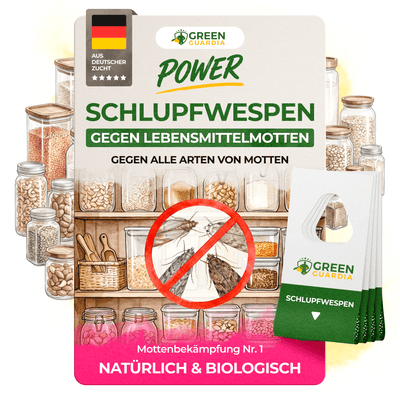
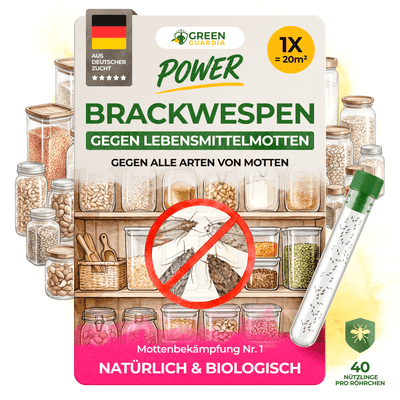
🐞 Tip: The sooner you react, the faster you will be rid of them. The targeted use of trichogramma wasps against pantry moths is particularly effective because they address the root cause directly: the moth eggs.
Combating: Natural measures that really work
Getting rid of pantry moths works best with a consistent combination of removing the source, thorough cleaning, and a biological interruption of the life cycle. This prevents moths from reappearing after a few weeks.
1) Radically check & sort out supplies
- Empty all cupboards completely and check every package (including teas, pet food, and baking ingredients).
- Dispose of suspicious products (well-sealed, directly outside).
- Transfer unaffected supplies into tightly sealing containers (glass/metal/hard plastic).
2) Clean thoroughly – the details make the difference
- Vacuum the cupboard completely: corners, drill holes, tracks, crevices, back panel.
- Wipe down with a damp cloth afterwards, carefully cleaning edges & folds.
- Empty the vacuum bag/container outside immediately afterwards.
3) Interrupt the life cycle: Use trichogramma wasps
To ensure pantry moths don't return in "waves," the egg → larva → moth cycle must be interrupted. This is exactly where trichogramma wasps against pantry moths are particularly helpful: They are tiny, unobtrusive, and specifically seek out moth eggs. This reduces the infestation pressure step by step – completely without aggressive chemicals.
4) Avoid recurrence: stay consistent
- Check cupboards regularly over the next few weeks (especially corners & back panels).
- Store supplies only in tightly sealed containers.
- In case of recurring infestation: Use trichogramma wasps against pantry moths as a natural supplement to hygiene.
Prevention: How to protect your kitchen long-term
The best prevention against pantry moths is storage that leaves no room for moths: clean, dry, tightly sealed. With a few simple routines, you significantly reduce the risk.
Prevention that works in everyday life
- Transfer supplies into airtight containers (flour, cereal, rice, nuts, pet food).
- Avoid old stock: "First in – first out" (use older items first).
- Regularly remove crumbs & product dust, especially in crevices.
- Check new purchases briefly before putting them in the cupboard.
- In risk zones: add natural protection – e.g., with trichogramma wasps against pantry moths.
✅ Note: Moths love forgotten supplies. If you store items cleanly and check regularly, you take away the foundation for pantry moths. And if you want to stop the infestation sustainably, trichogramma wasps against pantry moths help break the cycle.
Frequently Asked Questions about Pantry Moths
How long does it take to get rid of pantry moths?
It depends on how early you detect the infestation and whether you consistently interrupt the life cycle. With thorough hygiene and the targeted use of trichogramma wasps against pantry moths, the infestation can often be significantly reduced within a few weeks.
Which foods are most frequently affected?
Particularly common: flour, grain products, cereal, rice, semolina, nuts, dried fruit, baking ingredients, as well as pet food. It is crucial that you check all supplies – even the ones "in the back of the cupboard."
Why do moths keep coming back despite cleaning?
Because eggs or larvae often remain in crevices, folds, or inconspicuous packages. Cleaning is important – but it is often not enough on its own. A sustainable solution is created when you additionally stop the cycle, e.g., with trichogramma wasps against pantry moths.
Are trichogramma wasps safe in the kitchen?
Trichogramma wasps are very small, inconspicuous, and specialized in moth eggs. They are used where moths occur (pantry, larder) and help to reduce the moth population naturally.
Take action now:
If you really want to get rid of pantry moths permanently, opt for the combination of consistent sorting out, thorough cleaning, and a natural interruption of the life cycle. This is exactly what trichogramma wasps against pantry moths are a proven solution for: They work where it matters – on the moth eggs – and support you in sustainably protecting your kitchen and supplies.


