



















































Premium quality
Eggs from controlled German breeding.

Fresh delivery
Reliable and fresh delivery from Monday - Thursday.

100% satisfaction
Over 450,000 satisfied customers.

NATURAL & SAFE
Risk-free for children, pets & plants.


FAQ Warehouse wasps
Do you have questions about our products, their application, or shipping? Here you will find the most important answers at a glance. If anything remains unclear, feel free to contact us!

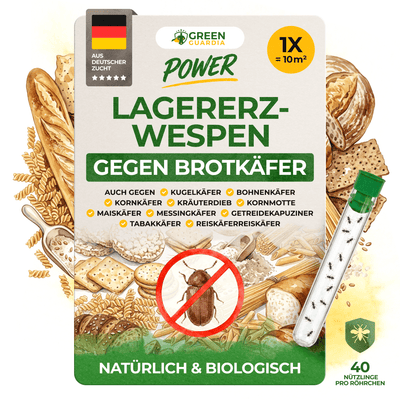
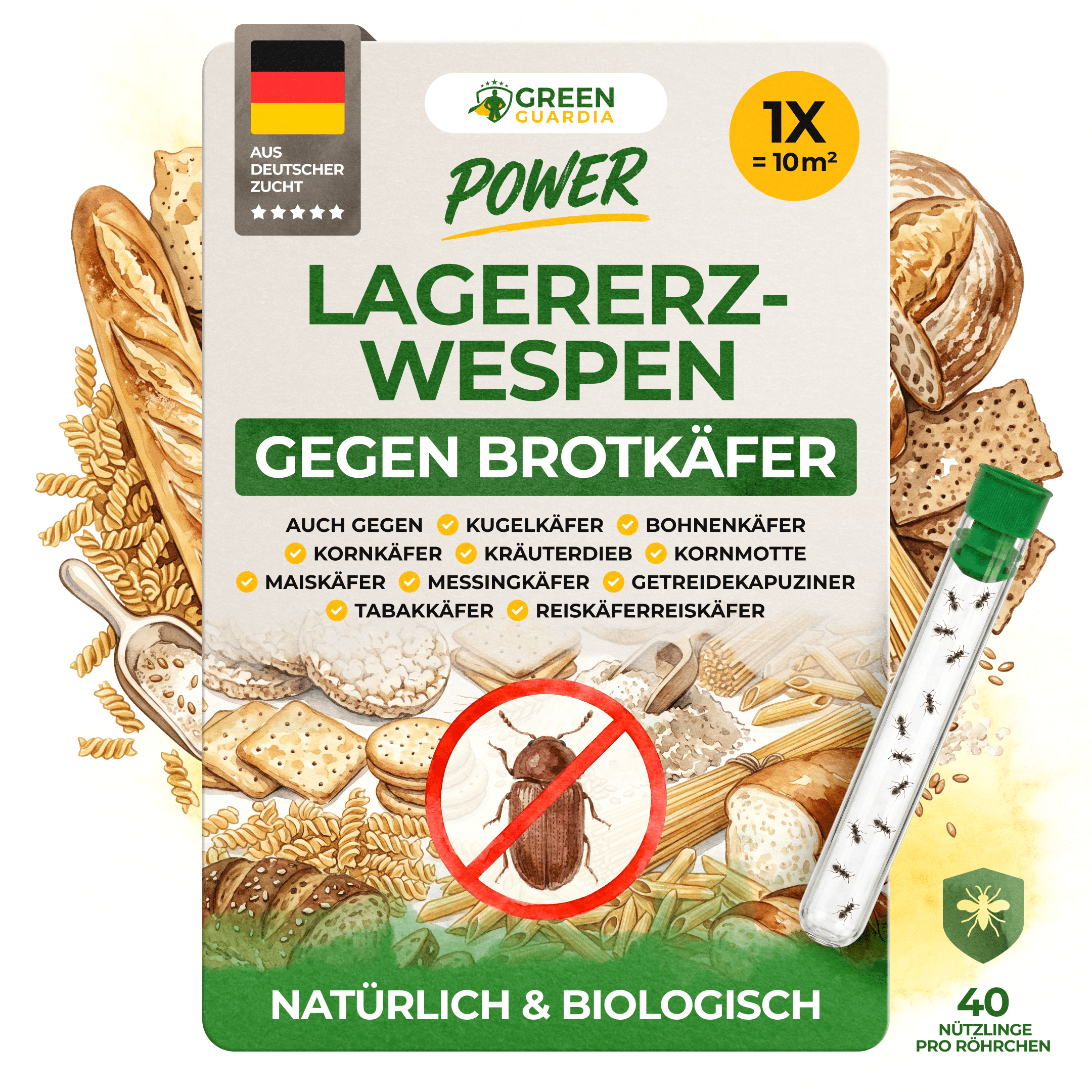
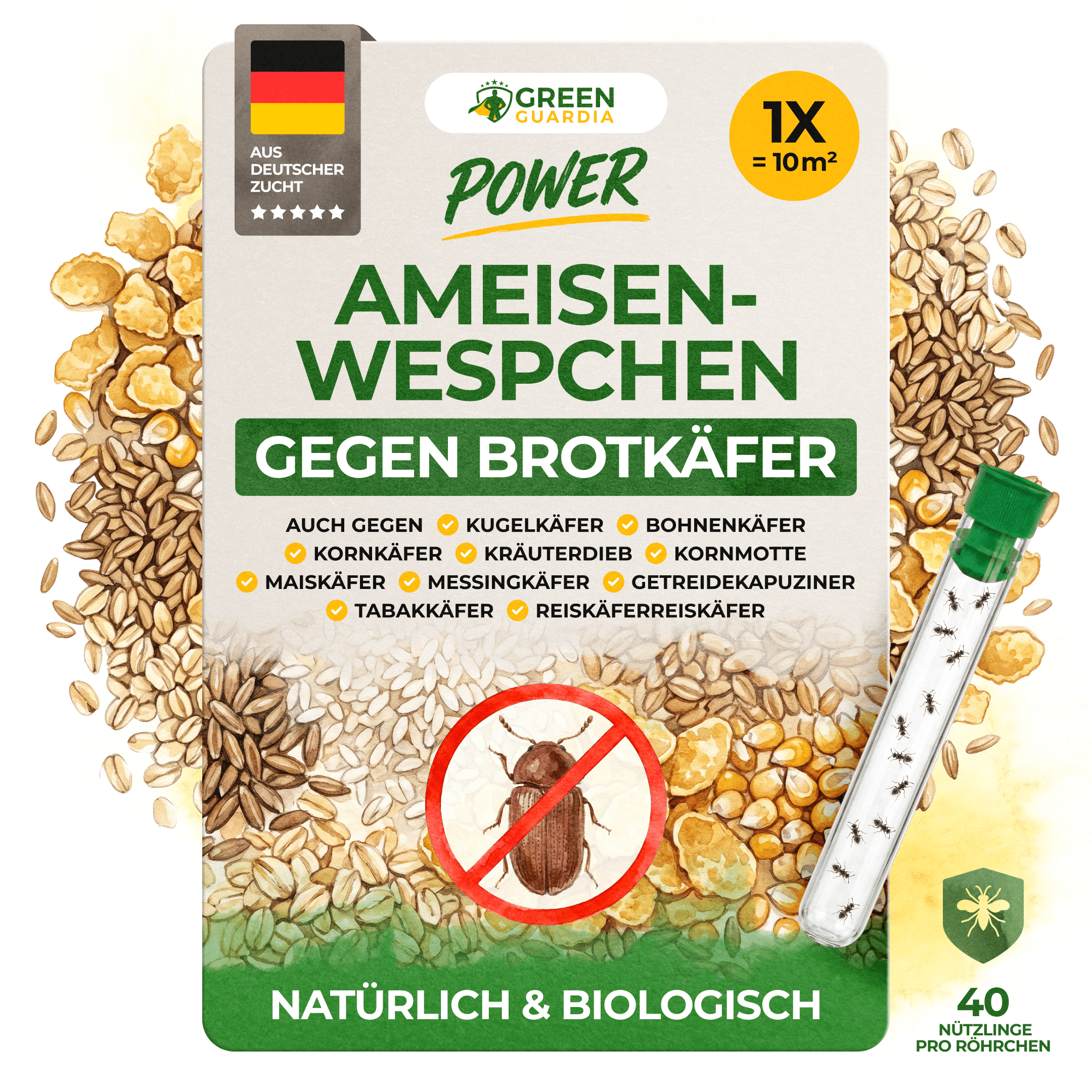
Warehouse wasps (Lariophagus distinguendus) are tiny, flightless beneficial insects specialized in combating stored-product pests such as drugstore beetles, grain weevils, or rice weevils. They actively track down beetle larvae and parasitize them, which kills the pests.
They are excellent for controlling drugstore beetles, grain weevils, rice weevils, cigarette beetles, spider beetles, maize weevils, Australian spider beetles, lesser grain borers, bean weevils, brassy grain beetles, and the grain moth.
No, warehouse wasps are completely harmless to humans, pets, and other beneficial insects. They are tiny, do not sting, and disappear without a trace once their job is done.
Depending on the temperature and the development stage of the beetle larvae, initial results can be seen after just a few weeks. Application over several months significantly improves the effectiveness.
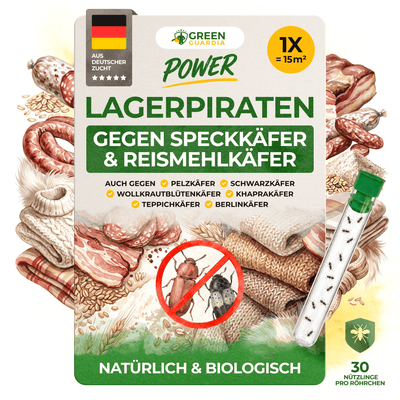
Yes, they can be well combined with, for example, parasitic wasps or storehouse pirates to cover a broad spectrum of pests.
The animals are only 0.3–0.4 mm small and behave very inconspicuously. They usually work in hiding and die off without residue when they no longer find host larvae.
They arrive alive in small plastic tubes that can be opened directly at the site of infestation.
One tube contains more than 40 wasps – to compensate for any possible losses during transport or after release.
Best immediately after receipt. For short-term storage, keep them cool and dark for a maximum of 1–2 days at 8–12 °C.
Yes, as long as the room temperature is at least 16 °C. They are ideal for heated storage rooms and kitchens.
In case of heavy infestation, we recommend regular follow-up deliveries at intervals of approx. 3–4 weeks to catch all beetle generations.
Yes, we pack the tubes to be transport-safe – and deliberately include extra beneficial insects so that a sufficient effect is ensured, even if some do not make it to their destination.
Simply open the tube near the infested supplies, cupboards, or shelves. The wasps will set off on their own to search for beetle larvae.
We recommend 1 tube per 10 m² of affected area or per closed unit like a pantry cupboard or storage chamber.
Initial successes are often visible after a few days; the complete reduction of pests takes 2–4 weeks depending on the severity of the infestation.
Yes, preventive use is especially sensible in high-risk storage areas to prevent re-infestation.
Let the wasps work actively for at least 2–3 weeks. In case of heavy or recurring infestation, you should repeat the application.
The warehouse wasps can track down and combat beetle larvae even in narrow cracks or deep inside packaging material – even at depths of up to four meters.
No, they are exclusively specialized in pests and cause absolutely no damage to furniture or materials.
Pest activity visibly decreases – less feeding damage, no more beetles or larvae visible.
The warehouse wasps die off on their own as soon as they find no more host animals – completely without residues.
For complete control, a duration of 1 to 1.5 years with repeated releases is recommended.
Pheromones should be avoided as they can disrupt the wasps' orientation. Mechanical traps like beetle traps are, however, possible.
Yes – they are an effective, chemical-free solution for storage facilities, mills, museums, or historical buildings with sensitive inventories.