











































Fighting sciarid flies: How to effectively protect your plants
Small black flies buzzing around flower pots are annoying – and there is often more to it than just “a few insects.” In everyday language, the term “Haarmücken” (march flies) is often used to refer to fungus gnats (Trauermücken). While the adult insects are a nuisance, the real problem lies with the larvae in the growing medium, which can damage fine roots. In this guide, you will learn how to reliably identify fungus gnats, reduce infestations naturally, and protect your plants long-term – with a clear focus on sustainable solutions like SF nematodes for fungus gnats and, as a supplement, predatory mite mix (spreadable).
Causes: Where do fungus gnats come from?
Fungus gnats are almost always caused by conditions their larvae love: permanently moist substrate, organic material, and little “resistance” from the soil life. They are often introduced via new plants, fresh potting soil, or already infested pots – and then multiply rapidly.
Typical triggers at a glance
- Watering too often and constantly wet soil
- Substrates with high organic content (e.g., compost content)
- New plants/soil as a source of infestation
- Warm indoor environments – ideal breeding conditions all year round
Recognition: How do you spot a fungus gnat infestation?
Adult insects often sit on the edge of the pot or fly up when you water. The critical factor for plant health is the larvae in the soil: They are small, glassy-white, and live in the upper layer of the substrate. In the case of a severe infestation, plants may look “wilted” despite having water because their fine roots are weakened.
Typical signs
- Small black flies near the pots
- Many insects fly up when you shake or water the pot
- Young plants/cuttings grow poorly or keel over
- Permanently moist soil with a “musty” smell
🪴 Tip: If you see many adult fungus gnats, this is often a sign that there are already larvae in the substrate. A natural approach works particularly well here – e.g., with SF nematodes for fungus gnats.
Control: Which measures really help?
The best strategy is to reduce larvae in the soil while simultaneously making conditions less favorable for their development. Adult insects are more of a “symptom” – the cause is in the substrate. Therefore, rely on a combination of adjusting plant care and using targeted, natural helpers.
1) Immediate measure: Adjust watering habits
- Watering breaks: Let the surface dry out between waterings.
- Less waterlogging: Empty saucers after watering and check drainage.
- Loosen substrate: Carefully loosen the top few centimeters without damaging the roots.
2) Natural helpers in the substrate: SF nematodes for fungus gnats
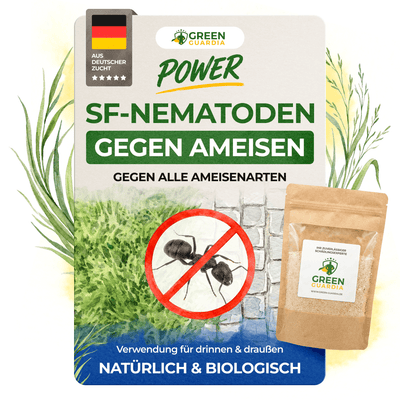
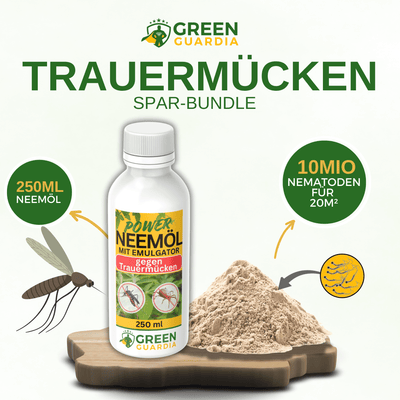
For the targeted reduction of larvae in the soil, nematodes are a particularly practical solution: they are applied with the irrigation water and work where the problem is located – in the substrate. For sustainable support, we recommend SF nematodes for fungus gnats.
- Application: Mix with water and apply evenly (follow instructions).
- Important: Keep the substrate slightly moist during the active phase so the nematodes remain active.
- Consistency: If the infestation is heavy, reapply after a few days/weeks if necessary (depending on infestation pressure).
3) Supplement: Predatory mite mix (spreadable)
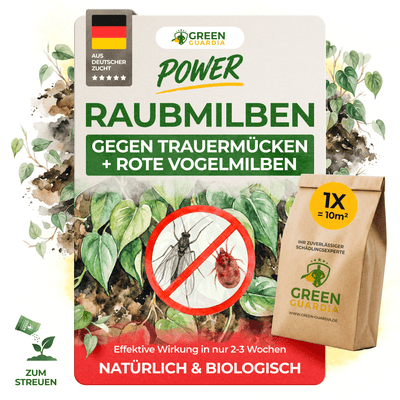
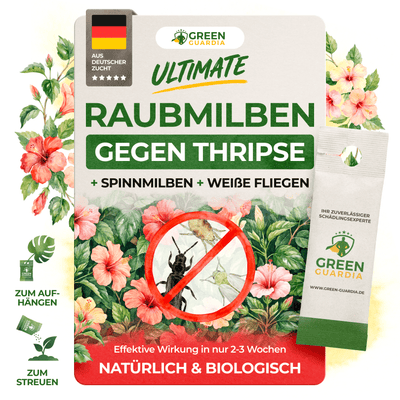
If you would like a broader strategy, a supplementary application around the plants can be useful. A spreadable product that is easy to apply is particularly practical – e.g., Predatory mite mix for fungus gnats (spreadable).
4) If the infestation is persistent: Check & replace soil
- Severely infested soil can be partially or completely replaced (depending on the plant).
- Clean pots and thoroughly scrub saucers.
- Store new soil in a dry place and check it briefly before repotting.
✅ Practical advice: To get rid of fungus gnats long-term, it is best to target the larvae. A combination of adjusted, calm watering and a targeted application of SF nematodes for fungus gnats is ideal.
Prevention: How to prevent new fungus gnats
The best prevention is a care routine that does not keep the substrate permanently wet – because that is the main booster for fungus gnats. In addition, clean processes with new plants and soil help.
Proven preventive measures
- Systematic watering: Only water when the surface has dried out.
- Use drainage: Check for expanded clay/drainage layer and drainage holes.
- Isolate new plants: Keep them separate for 7–14 days and observe.
- Store soil correctly: Keep it dry, cool, and well-sealed.
- During risk phases, targeted support using SF nematodes for fungus gnats can be useful (e.g., after repotting).
Frequently Asked Questions about fungus gnats
Are march flies and fungus gnats the same thing?
In everyday language, “march flies” (Haarmücken) is often used as a collective term for small, black flies on houseplants – though people often mean fungus gnats (Trauermücken). The crucial point is: The larvae in the substrate are the main problem. If you are unsure, a visual inspection of the soil or brief observation while watering will help.
What is the fastest way to help against fungus gnats in flower pots?
A combination of watering breaks (letting the substrate surface dry out) and a targeted measure against larvae is effective quickly. SF nematodes for fungus gnats are particularly suitable for this because they tackle the problem at its source.
How long does it take for the infestation to visibly decrease?
Adult insects may continue to appear for a few days. If you consistently target the larvae and stabilize your watering behavior, the population will generally decrease gradually within 1–3 weeks (depending on infestation pressure and conditions).
Can I combine nematodes and predatory mites?
Many people rely on a combination of measures because they can cover different “levels.” It is important to follow the application instructions and optimize care conditions (especially avoiding constant moisture). As a supplement, predatory mite mix (spreadable) can fit into the overall concept.
Take action now:
Fungus gnats may seem harmless – but if there are larvae in the substrate, plants can suffer in the long term. It is best to start immediately: stabilize your watering routine, check for infestation, and tackle the cause specifically. For natural support, you will find suitable solutions with us, such as the proven SF nematodes for fungus gnats or, as a supplement, the predatory mite mix (spreadable).


