





































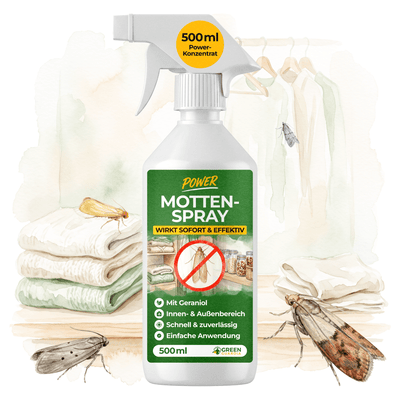








Fighting clothes moths naturally and effectively – how to protect your clothing!
Holes in your wool sweater, fine webbing in the drawer, or sudden “dusty” crumbs in dark corners? Then it is quite possible that clothes moths are active. The good news: with consistent measures, a clear routine, and natural helpers, you can fight clothes moths and protect your textiles in the long term—completely without panic and without unnecessary chemicals.
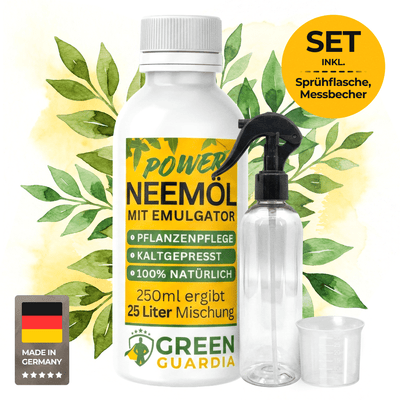
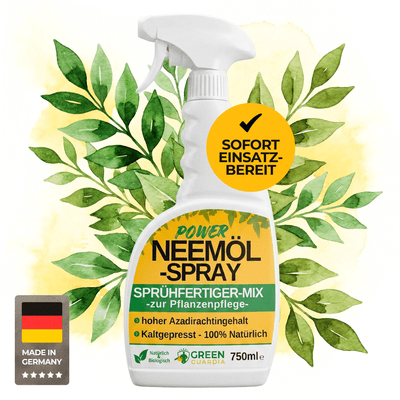
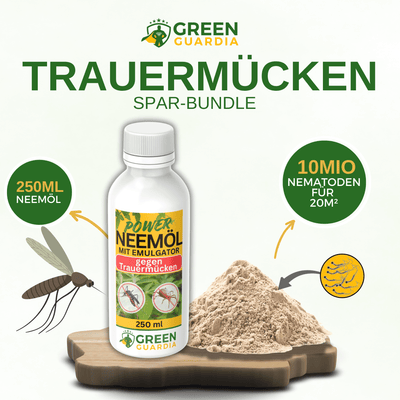
For a targeted and sustainable solution, the use of beneficial insects has proven effective—for example, with trichogramma wasps against clothes moths. Additionally, you can rely on plant-based care and protection solutions, such as neem oil (plant-based protective care for the home) – however, please note: always communicate neem oil in the textile sector in a legally neutral way as a care/protection application, not as “pest control.”
Causes: Where do clothes moths come from?
Clothes moths often enter the home unnoticed – via second-hand clothing, rugs, blankets, storage boxes, or even through open windows. They love peace, darkness, and natural fibers. Especially where textiles are stored for a long time and are rarely moved (cupboards, boxes, attic), they find ideal conditions.
Why are clothes moths becoming active right now?
- Rarely used textiles: Clothing is stored seasonally and not moved for a long time.
- Natural fibers: Wool, cashmere, felt, silk, and fur are particularly attractive.
- Indoor warmth: Consistent temperatures encourage their development.
- Inconspicuous start: Initially, you usually see no moths – the damage is caused by the larvae.
Detection: How do you know you have a clothes moth infestation?
Many people search for “moths in the cupboard” – but the most important point is: The larvae cause the damage, not the adult moths. Often, you only notice an infestation when textiles already have holes.
Typical signs of clothes moths
- Small holes or thin spots in wool/cashmere/felt
- Webbing or small threads in seams, pockets, or hems
- Crumbs/particles (“larval droppings”) in dark areas of the cupboard
- Moths that prefer to run rather than fly and hide in quiet areas
🧥 Tip: Check your wool sweaters, scarves, carpet edges, and rarely worn clothing in particular. This is exactly where a targeted, sustainable measure is worth it – e.g., with trichogramma wasps against clothes moths.
Combatting: Natural measures that really help
If you want to fight clothes moths, you need two things: 1) a consistent cleaning/decluttering routine and 2) a measure that reliably interrupts the life cycle. This is exactly where beneficial insects are particularly strong.
1) Immediate measures: Clear out the cupboard, clean, and secure textiles
- Clear everything out: Clothing, boxes, inserts, baskets – really everything.
- Treat textiles: Washable? If possible, use high heat (according to the care label). Alternatively, use cold/heat (see below).
- Clean the cupboard thoroughly: Vacuum and wipe out joints, holes, hinges, and corners.
- Dispose of vacuum cleaner bags: Seal them securely directly after vacuuming and take them outside.
2) Stop the life cycle: Trichogramma wasps against clothes moths
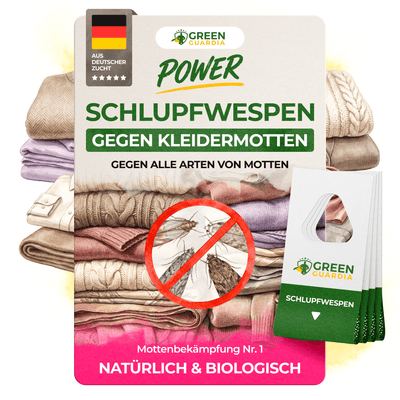
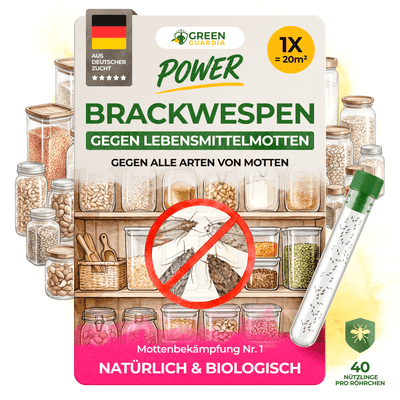
Trichogramma wasps are tiny, useful helpers that specifically target moth eggs – and thus interrupt the egg → larva → moth cycle. For many households, this is the most effective “natural strategy” because it doesn't just fight the symptoms, it addresses the cause.
Trichogramma wasps against clothes moths are particularly well-suited for this – especially in wardrobes, chests of drawers, dressing rooms, and storage boxes.
- Gentle & practical: Ideal for living areas and wardrobes.
- Targeted: Work where moths multiply (on the eggs).
- Important: Keep at it over several weeks/application cycles so that eggs laid later are also caught.
3) Supplemental: Neem oil as plant-based protective care in the textile environment
In addition to beneficial insects, many rely on plant-based solutions for protective care and to support a clean, moth-unfriendly environment. If you want to use neem oil, ensure legally neutral communication and use it as a care/protection application (not as “moth control”). A suitable product is, for example, neem oil (for home & protective care).
- Suitable as a supplementary measure: e.g., as part of tidying, maintenance, and prevention.
- Important: Test for material compatibility in an inconspicuous area.
- Focus: Clean, well-maintained storage areas rather than “infestation language.”
4) Using household remedies correctly: Cold & heat against larvae
Household remedies are useful if applied correctly. Cold or heat can help against larvae – especially for individual, delicate items that cannot be washed in hot water.
- Cold: Pack textiles airtight and freeze for several days.
- Heat: Depending on the material, treat in the dryer/with heat (observe care label).
- Afterwards: Store clean and sealed so no new infestation occurs.
Prevention: How to protect clothing from clothes moths permanently
The best prevention is a combination of order, movement, and moth-unfriendly storage. This removes the conditions clothes moths love – and prevents a small infestation from becoming a long-term problem.
Proven preventative measures
- Move regularly: Reorganize clothing, air out cupboard areas, check rarely used compartments.
- Only store clean items: Do not put worn wool/textiles back “half-clean.”
- Store tightly: Keep seasonal clothing in well-sealed boxes/bags.
- Create routines: A quick cupboard check once a month instead of a major emergency operation.
- For risk areas, a preventative strategy with trichogramma wasps against clothes moths can be sensible (e.g., attic, storage boxes, carpet cupboard).
Frequently asked questions about clothes moths
Why do clothes moths appear even in a clean home?
Clothes moths do not need “dirt.” Often, dark, quiet areas and natural fibers are enough. They are frequently brought in unnoticed via new textiles, second-hand items, rugs, or storage boxes.
What is more effective: household remedies or trichogramma wasps?
Household remedies like cold or heat can secure individual textiles very well. However, to interrupt the life cycle in the cupboard, trichogramma wasps against clothes moths are particularly effective because they target the eggs – and thus the root cause.
How long does it take for clothes moths to disappear?
That depends on the infestation. The important thing is that you stay consistent and carry out measures over several weeks. Moths can lay eggs at different times – and that is exactly why multi-stage strategies (cleaning + beneficial insects + prevention) are so successful.
Can I use neem oil in connection with clothes moths?
Neem oil is often used as a plant-based care and protection solution in the home. Ensure a material-friendly application, test for compatibility, and always use neem oil in the textile environment in a legally neutral way as a protection/care application. A suitable product for this is, for example, neem oil (for home & protective care).
Take action now:
If you take action now, a clothes moth infestation can usually be stabilized quickly – and avoided in the long term. Clear out the affected areas consistently, clean thoroughly, and rely on a sustainable solution that reliably interrupts the cycle. Trichogramma wasps against clothes moths have proven particularly successful. Additionally, you can support your storage areas with plant-based protective care – e.g., using neem oil (home & protective care).