










































Protecting your boxwood from the box tree moth: Effective and sustainable control methods
The boxwood is a garden classic – which makes it all the more frustrating when you suddenly see brown shoots, webbing, and bare patches. The box tree moth is often to blame. Anyone looking to control the box tree moth should act early: This can significantly reduce damage and keep the boxwood vital in the long term. In this article, you will learn how to detect an infestation, which measures really help, and how to protect your boxwood sustainably.
Causes: Where does the box tree moth come from?
The box tree moth (Cydalima perspectalis) is a moth whose caterpillars specialize in boxwood. The insects can enter your garden via newly purchased plants, neighboring gardens, or by flying in. The main issue is: The caterpillars are initially well-hidden inside the plant, where they first cause feeding damage.
Why does the infestation spread so quickly?
- Multiple generations per season are possible (depending on the weather)
- Caterpillars hide deep within the boxwood – infestations are often noticed late
- Dense boxwood offers protection and ideal nesting spots
- New plants can carry eggs or young caterpillars unnoticed
Detection: How to spot the box tree moth
The earlier you detect the box tree moth, the easier it is to avoid large bare patches. Check your boxwood regularly – especially inside the plant and in sheltered areas.
- Fine webbing between the leaves and shoots
- Greenish-black caterpillars with light stripes (often well-camouflaged)
- Feeding traces: Leaves look “scraped off” and eventually become completely bare
- Droppings (small, dark pellets) inside the plant
- Yellowish to brown shoots and thinning areas
🐞 Tip: Gently open the boxwood with your hands and look inside. That is often where young caterpillars and webbing start out – from the outside, the plant may initially still look “healthy.”
Control: Measures that really work in the garden
A sustainable strategy relies on a combination: Monitoring, mechanical measures, and targeted plant care to support the boxwood. The goal is to lower infestation pressure and keep the boxwood resilient.
1) Remove caterpillars & prune heavily infested areas
- Remove caterpillars and webbing mechanically as early as possible (gloves recommended)
- Prune and safely dispose of heavily infested shoots
- Carefully inspect the boxwood afterward (to avoid secondary infestations)
2) Care & protection: Neem oil as plant-based support
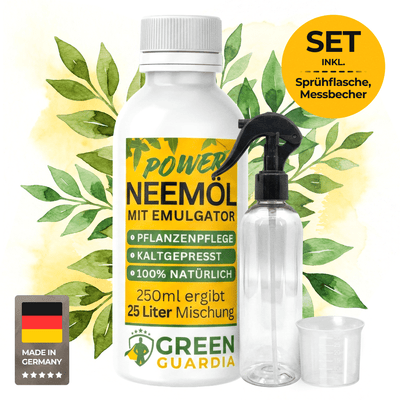
For plant-based, garden-friendly maintenance, many gardeners rely on neem oil – as part of a regular plant care routine and to protect against external stressors. This is where our Neem oil for boxwood care can be useful – especially if you want to specifically support the boxwood during stressful phases (e.g., after pruning or during periods of high garden activity).
Important: When using neem oil, always follow the instructions carefully to ensure the plant is evenly coated (including inside the boxwood). Regular plant care is often the deciding factor in keeping your boxwood stable throughout the season. If you want to build a sustainable routine, neem oil is a great addition to your garden year.
3) Accompanying garden hygiene
- Do not leave cuttings, webbing, or infested material lying around
- Clean tools after heavy pruning
- Regularly thin out the boxwood so that air and light can reach the interior
- Schedule weekly inspections during the season
4) If aphids appear as well: targeted additions
Especially in weakened plants or during warm weather, other stress factors sometimes arise – e.g., aphids on neighboring ornamental plants or elsewhere in the garden. If you want to reduce aphids quickly and easily, our Aphid control spray can be a useful addition to your daily garden care – especially to stabilize overall plant health in the immediate environment.
🐞 Tip: The key is consistency: Monitor, remove, care. A stable plant routine with neem oil plus consistent checks often significantly reduces the pressure.
Prevention: Keeping your boxwood protected long-term
When it comes to the box tree moth, prevention means: early detection, strengthening resilience, and reducing stress. This prevents small initial issues from turning into large bare patches.
Prevention checklist for boxwood in the garden
- Weekly inspection of the plant's interior (detect webbing/caterpillars early)
- Thinning out for better ventilation (fewer hiding spots, faster drying)
- Build a plant care routine (e.g., with neem oil)
- Check new plants: Carefully inspect new boxwoods before planting
- Garden hygiene: Dispose of cuttings properly, clean tools
FAQ on the box tree moth
How can I identify an early box tree moth infestation?
Often, the first signs are fine webbing and small dark droppings inside the boxwood. Regularly look inside the plant and check shoots and leaf undersides – young caterpillars are often well-hidden.
Which measures help fastest in an acute case?
Remove caterpillars and webbing mechanically, prune heavily infested areas, and dispose of everything securely. Afterward, it pays to build a stable care routine – e.g., using supplementary Neem oil for boxwood care.
How can I protect my boxwood sustainably?
The most important point is consistency: weekly checks, good ventilation through thinning, and reliable plant care. Many gardeners rely on neem oil as a plant-based addition to their seasonal maintenance.
What if aphids are also causing problems in the garden?
Aphids can place additional stress on plants, especially in warm weather. If you want to react quickly, our Aphid control spray can be a practical addition to support general plant health in the surrounding area.
Take action now:
Check your boxwood today: Open up the plant, inspect the interior, and remove any webbing immediately. For a sustainable care routine, we recommend regular plant maintenance with neem oil for boxwood. If aphids also appear in the garden, the Aphid control spray can be a useful supplement – to ensure your plants make it through the season in stable condition.