






















































Fighting the Sawtoothed Grain Beetle: Natural and Eco-friendly Methods
Have you discovered flat, brownish beetles in your pantry or small traces in flour, muesli, or pet food? If so, the sawtoothed grain beetle (Oryzaephilus surinamensis) might be the culprit—a common pantry pest that can spread quickly in dry food products. The good news: If you want to get rid of the sawtoothed grain beetle, it is usually quite reliable to do so by using a combination of consistent sorting, thorough hygiene, and sensible monitoring.
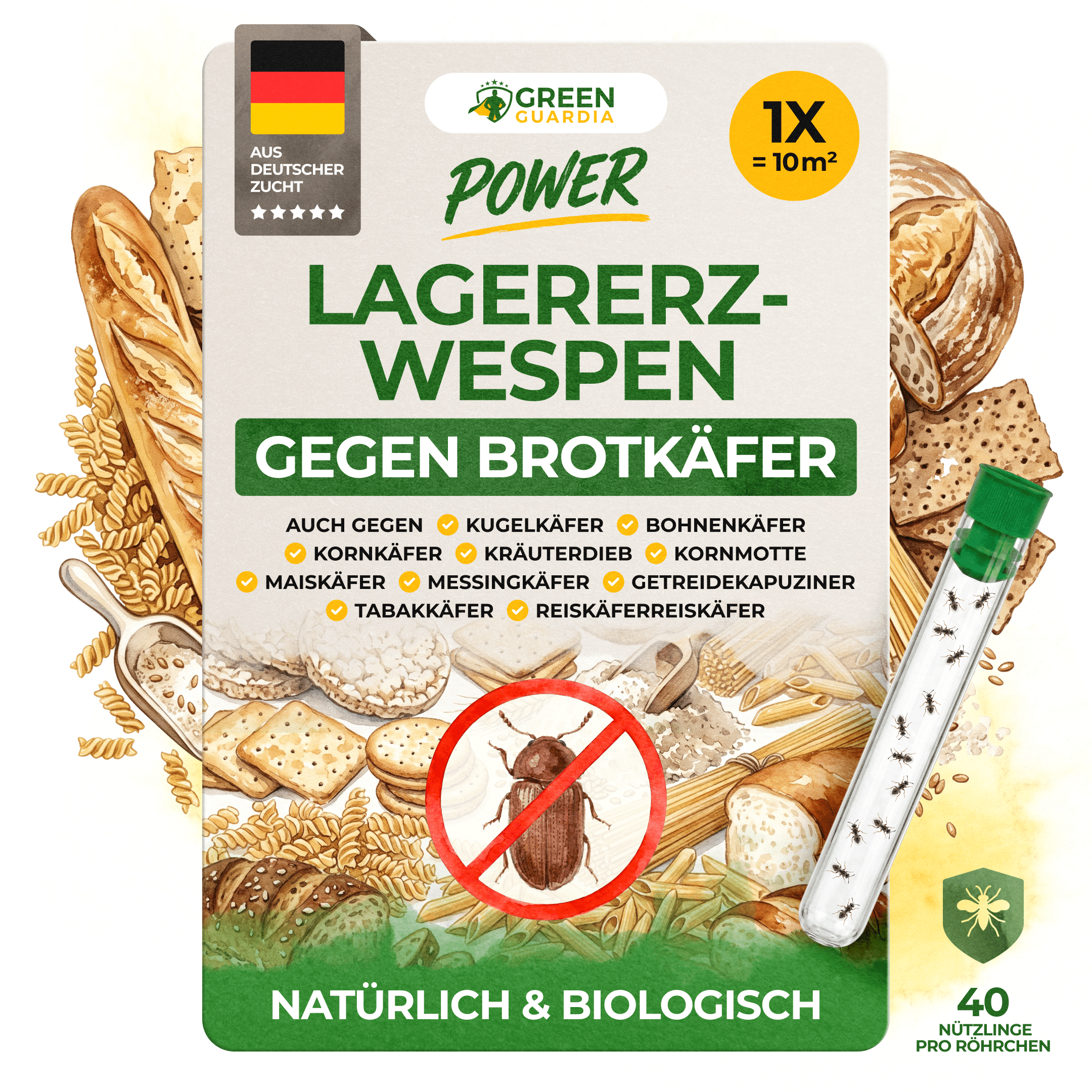
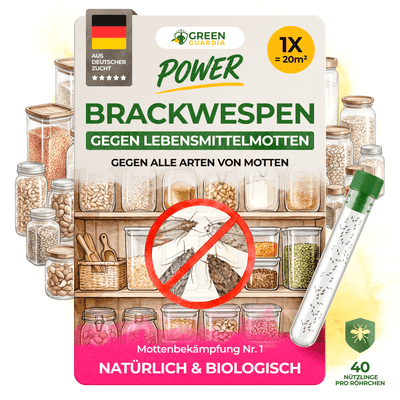
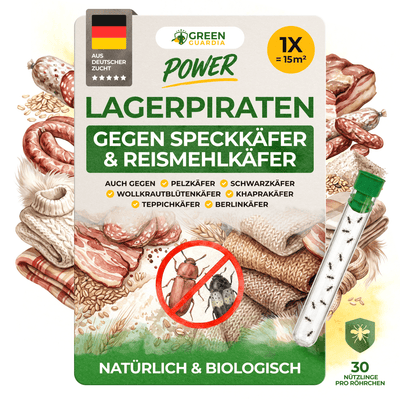
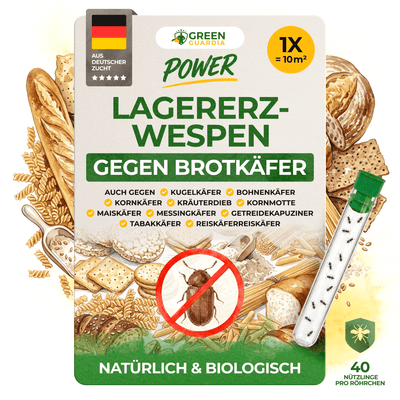
A clear strategy of identification, targeted measures, and prevention is particularly practical. For monitoring, you can use, for example, a beetle trap with a special pheromone lure. And if you also want to rely on natural support, Lariophagus wasps can help reduce hidden developmental stages in the vicinity of your supplies.
Causes: Where do sawtoothed grain beetles come from?
In most cases, the sawtoothed grain beetle is introduced—for instance, via already infested dry goods, pet food, or pantry products. They love warm, dry storage conditions and can hide in packaging, cracks, and hard-to-reach areas of cabinets.
These food products are frequently affected
- Flour, semolina, muesli, rolled oats, baking ingredients
- Pasta, rice, grains, seeds, nuts
- Spices, dried fruit, teas
- Pet food and bird food (especially larger bags)
🪲 Tip: Are you unsure if the infestation is still active? Use a beetle trap with a special pheromone lure to check—this way, you will quickly see if there are still beetles present.
Identification: How to spot sawtoothed grain beetles?
The sawtoothed grain beetle is relatively small and flat, which allows it to fit into the tiniest cracks. You often discover the damage before spotting the insects themselves. Watch out for these signs.
Typical signs of an infestation
- Small, flat, brownish beetles in the pantry or drawers
- Traces of crumbs/dust in packaging and corners
- Gnawed products, "crumbly" areas, or an unusual smell
- Beetles on window sills or near light sources (especially in the evening)
For a targeted infestation check, monitoring is useful: Place a beetle trap with a special pheromone lure near suspicious areas—this will help you quickly determine if and where activity still exists.
Combating: How to get rid of sawtoothed grain beetles
When you are combating sawtoothed grain beetles, consistency is the most important factor: remove the source of the infestation, clean thoroughly, and then monitor. These steps have proven to be particularly effective.
1) Consistently sort out infested supplies
- Check all dry goods and feed bags—even packs that "still look good."
- Seal infested items in airtight packaging immediately and dispose of them (do not leave them open in the kitchen).
- Do not transfer suspicious products to other containers—this easily spreads beetles and eggs in the cupboard.
2) Clean the cabinet thoroughly (including cracks and edges)
- Empty all shelves and vacuum thoroughly (corners, tracks, drill holes, door folds).
- Wipe surfaces with a damp cloth, then let them dry well.
- Dispose of the vacuum cleaner bag immediately (outside the house) to prevent re-infestation.
3) Natural follow-up: Lariophagus wasps for support
After cleaning, an "invisible residue" sometimes remains: developmental stages in hard-to-reach areas. Here, natural support can make sense, e.g., through Lariophagus wasps. They are used in pantry areas to reduce the risk of recurring activity.
At the same time, monitoring is worthwhile so you can clearly see the success of your measures: A beetle trap with a special pheromone lure helps to better assess infestation pressure and residual activity.
Prevention: How to protect your supplies long-term
Anyone who has had an infestation once does not want it again. With these eco-friendly routines, you can significantly lower the risk: better storage, short storage times, and regular checks.
Prevention in practice
- Transfer supplies: Store dry goods in tightly sealing glass or hard plastic containers.
- FIFO principle: Consume older supplies first and avoid long storage periods.
- Keep it clean: Remove crumbs, and regularly vacuum and wipe down corners.
- Monitor: For high-risk products, occasionally use a beetle trap with a special pheromone lure to get early indications.
Frequently Asked Questions about the Sawtoothed Grain Beetle
How can I identify sawtoothed grain beetles for certain?
Typical signs are small, flat, brownish beetles near dry goods as well as traces of crumbs/dust in corners and packaging. For targeted checks, a beetle trap with a special pheromone lure is helpful—this allows you to confirm activity more quickly.
What is the most important step to stop the infestation?
The most important step is to consistently remove the source of the infestation: sort out and dispose of all affected and suspicious supplies. This is followed by thorough cleaning to ensure no residue remains in cracks and corners.
Why do beetles sometimes return despite cleaning?
It is often due to overlooked packs, small remnants in cracks, or developmental stages that are not immediately visible. A combination of cleaning, monitoring (e.g., with a beetle trap), and natural support by Lariophagus wasps can help reduce the risk of re-infestation.
How can I best prevent future infestations?
Store dry goods in airtight containers, avoid long storage times, and keep your pantry clean. Occasional monitoring with a beetle trap with a special pheromone lure helps to detect new infestations at an early stage.
Take action now:
If you suspect an infestation of sawtoothed grain beetles, it is best to act immediately: check your supplies, remove infested products, and clean the cupboard thoroughly. For an eco-friendly, effective strategy, many households combine monitoring via a beetle trap with a special pheromone lure with natural support from Lariophagus wasps—this helps protect your supplies in a long-term and sustainable way.