












































Identify Vine Weevils and Combat Larvae with HB Nematodes
Semi-circular feeding marks on leaf edges and plants that wilt despite watering? Vine weevils could be the cause. Adult beetles feed on leaves, while their larvae damage the roots. Here you will learn how to recognize both stages and how to use our HB nematodes against vine weevil larvae effectively.
What are vine weevils?
Vine weevils are weevils of the genus Otiorhynchus. Well-known species include the black vine weevil (Otiorhynchus sulcatus). In gardens and on potted plants, both the beetles and the larvae can become noticeable.
Distinguishing them is important for control: Beetles cause leaf damage, while larvae feed in the root zone. The visible leaf damage and hidden root infestation therefore require different approaches.
Identifying vine weevils: Beetles, larvae, and damage symptoms
Adult beetles and typical notched feeding
Adult vine weevils often cause semi-circular feeding marks on the edges of the leaves. This notched feeding is a key indicator, though not definitive proof of the species on its own.
Many problematic species are primarily active at night. During the day, they may hide under pots, plant debris, or other sheltered spots. Therefore, inspect suspicious plants after dark as well.
What do vine weevil larvae look like?
They are typically pale, curved larvae with a brown head capsule. Unlike classic white grubs, they have no legs. You will find them in the soil or within the root ball.
What damage do the larvae cause?
- Feeding on fine and thicker roots.
- Impaired water uptake.
- Wilting despite sufficient soil moisture.
- Poor growth and declining vitality.
- Death of the plant in severe infestations.
Wilting leaves alone do not prove a larval infestation. Drought, waterlogging, and root diseases are also potential causes. Therefore, check the root area before treating.
Which plants are frequently infested?
Vine weevils can colonize numerous ornamental and edible plants. Affected plants include, for example:
- Evergreen woody plants: such as rhododendrons, cherry laurels, and yews.
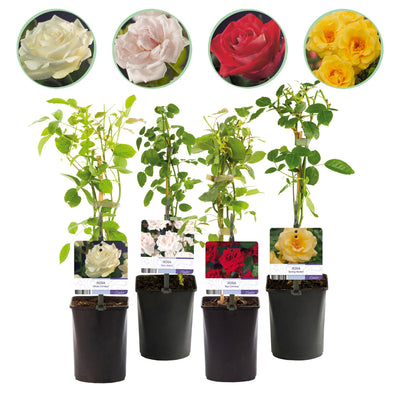
- Flowering ornamentals: such as hydrangeas and roses.
- Perennials and potted plants: especially when the root ball is infested.
- Berry fruits: such as strawberries.
In pots, severe larval feeding can be particularly damaging because the available root space is limited.
Development and spread of the vine weevil
Beetles lay eggs in suitable areas of the soil or substrate. The hatching larvae develop in the root zone. Pupation and the emergence of new beetles follow later.
Which stages are present simultaneously depends on the species and conditions. In protected crops, development may deviate from the usual outdoor timeline. Therefore, a fixed month alone is not sufficient for planning.
How do the pests get into the garden?
Infested plants may bring along larvae or other stages within their root balls. Wandering beetles can also colonize new areas. An appearance does not automatically mean that the plants were improperly cared for.
What to do in case of a vine weevil infestation?
1. Check beetles and larvae separately
Search for adult beetles when leaf damage is present. For weakened plants, check the roots as well. Leaf damage does not show how many larvae are currently present in the soil.
2. Collect accessible beetles
Inspect the plants at night using a flashlight. Pick off clearly identified beetles. Also check sheltered daytime hiding places without unnecessarily damaging the plants.
3. Plan soil treatment for larval infestations
If suitable target stages are present, you can prepare the treatment of the root zone. Measure the soil temperature and determine the area to be treated.
4. Protect weakened plants
Avoid severe drying out as well as permanent waterlogging. Repeated removal and complete dismantling of the root ball can cause additional stress.
Our solution: HB nematodes against vine weevil larvae
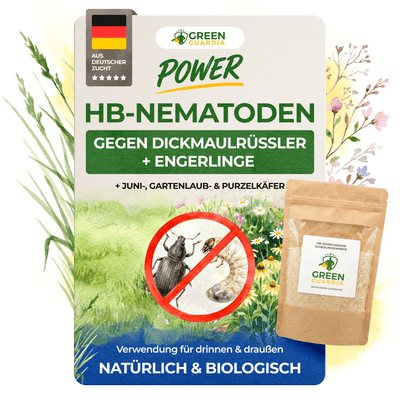
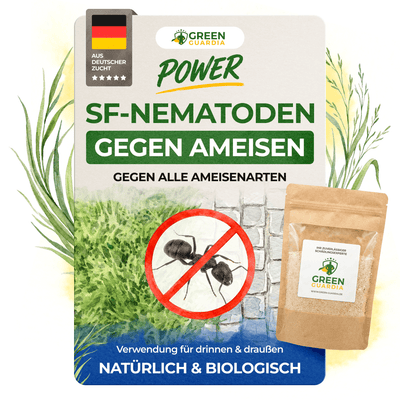
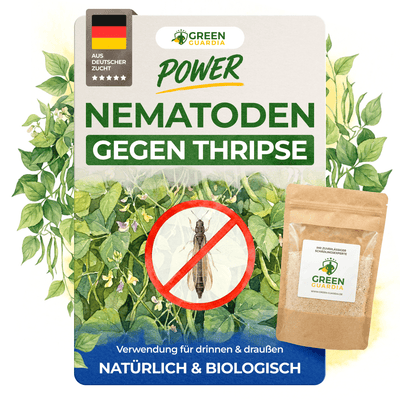
GREEN GUARDIA HB Nematodes
Our HB nematodes contain Heterorhabditis bacteriophora. They are applied with water to the affected soil or substrate and can infect suitable vine weevil larvae.
Your Benefits
- Targeted approach directly where root damage occurs.
- Application with water according to product instructions.
- For suitable applications in flower beds and planters.
Important for Success
Suitable target stages, sufficiently warm soil, and even moisture must align. Adult beetles on the leaves are not controlled by this watering treatment.
Select HB nematodesHow do HB nematodes work?
Insect-pathogenic nematodes are microscopic roundworms. They can infect suitable host larvae and kill them together with their symbiotic bacteria. A successful application can limit further larval feeding.
Roots that are already destroyed are not repaired by this. The plant subsequently needs time and proper care to form new roots.
When are HB nematodes used against vine weevils?
Suitable application windows are often in spring and in late summer to autumn. However, the deciding factors are the presence of larvae and the actual soil temperature.
For the linked product, an application is specified from about 12 °C soil temperature. The current delivery instructions remain authoritative. A warm afternoon does not automatically mean that the root zone is also warm enough.
Buying guide based on infestation situation
| Situation | Relevant Consideration |
|---|---|
| Larvae found in the root ball | Verify identification and soil conditions, then plan treatment. |
| Only old leaf notches visible | First confirm current infestation. |
| Adult beetles on leaves | Account for beetles separately; HB watering treatment does not replace this. |
| Soil still too cold | Check for a suitable time or a technically appropriate alternative. |
| Multiple separate pots affected | Plan for sufficient quantity and complete distribution. |
Applying HB nematodes correctly
- Determine target pest: Distinguish legless vine weevil larvae from other soil larvae.
- Determine treatment area: Consider all affected root zones and planters.
- Measure soil temperature: Compare with product specifications.
- Moisten dry soil: The solution should reach the rooted zone.
- Prepare fresh solution: Strictly follow specifications for water and nematode quantities.
- Apply evenly: Use suitable equipment and regularly agitate the mixture according to instructions.
- Avoid direct sunlight: Protect nematodes from UV radiation and drying out.
- Post-water and keep moist: Ensure even moisture for the prescribed duration without causing waterlogging.
Which pack size do you need?
Choose based on the current coverage of the product. Consider all areas and containers to be treated. A blanket number of pots does not fit every plant size.
More water does not replace an adequate amount of nematodes. Do not distribute too small a pack across an arbitrary number of additional plants.
Observe storage and shelf life
HB nematodes are live goods. Observe the information on the packaging and delivery instructions. Plan the application promptly and avoid direct sunlight, overheating, and improper storage.
How quickly do nematodes work against vine weevils?
Progress depends, among other things, on temperature, moisture, severity of infestation, and accessibility of the larvae. Visible recovery of damaged plants does not happen immediately.
How do you recognize an improvement?
- Fewer live larvae during an appropriate follow-up check.
- No progressive root damage.
- Stabilization of the plants, provided no other cause is present.
- New roots and healthy growth at a later stage.
Old leaf notches remain visible. New leaf damage can also come from still existing adult beetles. It does not automatically prove that the larval treatment was unsuccessful.
When is a repetition advisable?
First check whether suitable target stages are still present and application conditions were met. Plan repetitions according to product instructions and actual infestation progress.
Preventing vine weevils and limiting relapses
- Check new plants for leaf damage and suspicious root ball findings.
- Search for beetles at night if fresh notched feeding appears.
- Examine weakened plants for root damage.
- Take infested neighboring plants into account during planning.
- Water according to location requirements and protect damaged roots.
- Continue monitoring for new damage after a treatment.
Natural predators can contribute to regulation. However, a diverse garden does not automatically replace a targeted measure when a heavy larval infestation is confirmed.
Frequently asked questions about vine weevils and HB nematodes
How do I recognize vine weevils?
Typical signs are notched feeding on leaf edges and pale, legless larvae with a brown head in the root area. Confirm the infestation through a precise check.
Do HB nematodes help against the beetles?
The described watering treatment is directed against suitable soil-dwelling developmental stages. Adult beetles on the leaves are not controlled by this.
When should I apply HB nematodes?
When suitable target stages are present and the soil temperature meets the product requirements. Outdoors, spring and late summer to autumn are often relevant.
Can the soil dry out after application?
It must remain sufficiently moist during the prescribed treatment phase. At the same time, avoid waterlogging. The exact duration is stated in the instructions.
Do I have to repot the entire plant?
Not automatically. A nematode treatment can be carried out in the existing substrate. In case of additional problems such as unsuitable soil or root rot, the situation must be assessed separately.
Are vine weevil larvae white grubs?
They are not the same. Classic white grubs have three pairs of legs. Vine weevil larvae are legless. Exact identification is important for product selection.
Why is new leaf damage occurring despite nematodes?
Already present adult beetles may continue to feed on leaves. Soil treatment does not reach these pests. Therefore, check beetles and larvae separately.
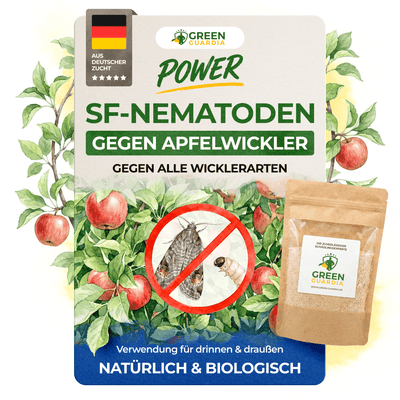
Can I use SF nematodes instead of HB nematodes?
Not without checking. Choose an explicit application recommendation for the target pest and conditions. Nematode products are not freely interchangeable.
Are HB nematodes dangerous to humans or pets?
These insect-pathogenic nematodes are not parasites of humans or pets. Nonetheless, observe the handling instructions of the specific product.
Can the infestation return after treatment?
Yes. Remaining beetles, re-oviposition, or introduced plants can cause further larvae. Therefore, monitoring remains important.
Do I need to use nematodes for every hole in a leaf?
No. Check the cause first. Larval treatment is useful if the target stage and conditions match, not simply because of unspecified leaf damage.