







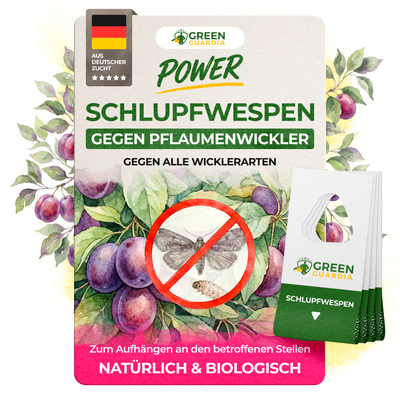






































Plum Fruit Moth: Identifying "wormy" plums & natural prevention
The plum fruit moth is a butterfly whose larvae feed on plums and damsons. Typical signs are "wormy" fruit, small entry holes and often premature fruit drop. Learn here how to recognize a plum fruit moth infestation, interrupt the cycle and protect your harvest sustainably.
What is the plum fruit moth?
The plum fruit moth is a small moth from the tortrix moth family. The adult moths are inconspicuous – the damage is caused by the larvae: After laying eggs, they bore into young fruits and feed inside. As a result, fruits become soft, fall off early, or are "wormy" at harvest time.
How to recognize an infestation
- premature fruit drop (especially with young fruits)
- small entry hole on the fruit, sometimes with "gummosis" (sap flow)
- brown feeding tunnels/mushy fruit interior
- larvae or crumbs/feeding debris inside the plum
Which plants are affected?
- Plums
- Damsons
- Mirabelle plums
- Greengages (depending on region/variety)
Why does an infestation occur?
- overwintering larvae/pupae in bark crevices or on the ground
- fallen fruit is left lying around (larvae can pupate)
- warm spring/summer encourages development
- lack of monitoring (infestation is only visible when fruits are already "wormy")
What to do in case of infestation? (natural & sensible)
1. Consistently remove fallen fruit
- collect and dispose of daily (do not put on the compost)
- do not store affected fruit
2. Use monitoring
- pheromone traps help to detect moth flight
- traps indicate the right time for further measures
3. Reduce hiding places/overwintering sites
- keep an eye on bark and the area around the trunk
- keep the tree environment clean (remove leaves/fruit)
Natural antagonists & garden practice
A natural garden supports antagonists like birds and predatory insects. Everyday practice is also decisive: fallen fruit management and monitoring are the biggest levers to reduce infestation in the long term.
FAQ about the plum fruit moth
Why do many fruits fall off early?
Affected fruits are often shed prematurely. This is a typical sign, especially if you also find entry holes.
Are pheromone traps enough on their own?
They are very good for monitoring and show moth flight. For sustainable success, removing fallen fruit is also important.
Can I still eat infested plums?
For quality reasons, affected fruits are usually discarded. If you generously remove individual spots, it is often a matter of taste – they are unsuitable for storage.
How can I prevent it?
Consistently remove fallen fruit, monitor regularly, keep an eye on moth flight using a trap and keep the tree area clean.