






















































Darkling Beetles: Identifying & naturally stopping pantry beetles
"Darkling beetle" is a general term for various dark-colored beetles that can appear in food storage – commonly the mealworm beetle. The damage is caused by both beetles and larvae (mealworms) that contaminate dry goods. Here, you will learn how to safely identify darkling beetles and get rid of them sustainably.
What are darkling beetles?
Darkling beetles are mostly medium-sized, dark-colored beetles belonging to the group of pantry pests. The mealworm beetle, whose larvae are known as mealworms, is particularly well-known. Beetles and larvae feed on flour, grain products, and other dry foods.
How to identify an infestation
- dark, elongated beetles in cupboards or packaging
- yellowish to brownish larvae (mealworms)
- crumbly, contaminated dry goods
- feeding damage and dust at the bottom of the package
Which foods are affected?
- Flour, semolina, cereal flakes
- Muesli, baking ingredients
- Pasta, rice products
- Pet and bird food
Why does an infestation occur?
- Introduction via already infested goods
- Long storage times
- Warm indoor climate
- Non-airtight packaging
What to do in case of infestation? (natural & sensible)
1. Remove infested food
- dispose of everything infested
- check adjacent packages as well
2. Clean the cupboard thoroughly
- empty completely
- vacuum cracks and corners
- wipe down with a damp cloth
3. Secure your supplies
- use only airtight containers (glass/metal)
- keep storage times short & check regularly
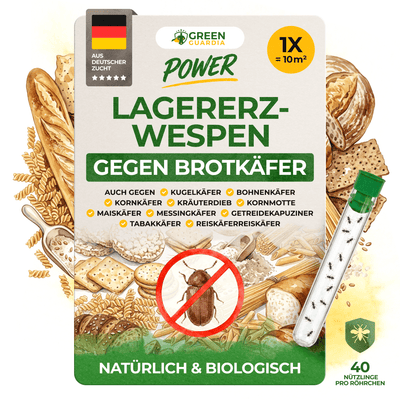
Beneficial insects against darkling beetles: Pteromalid wasps
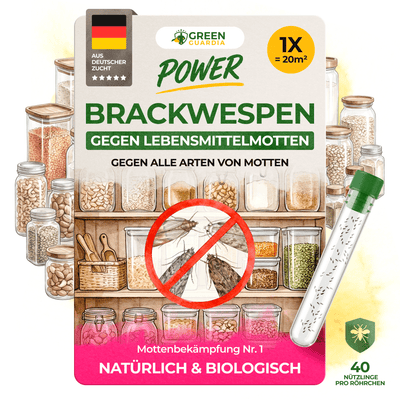
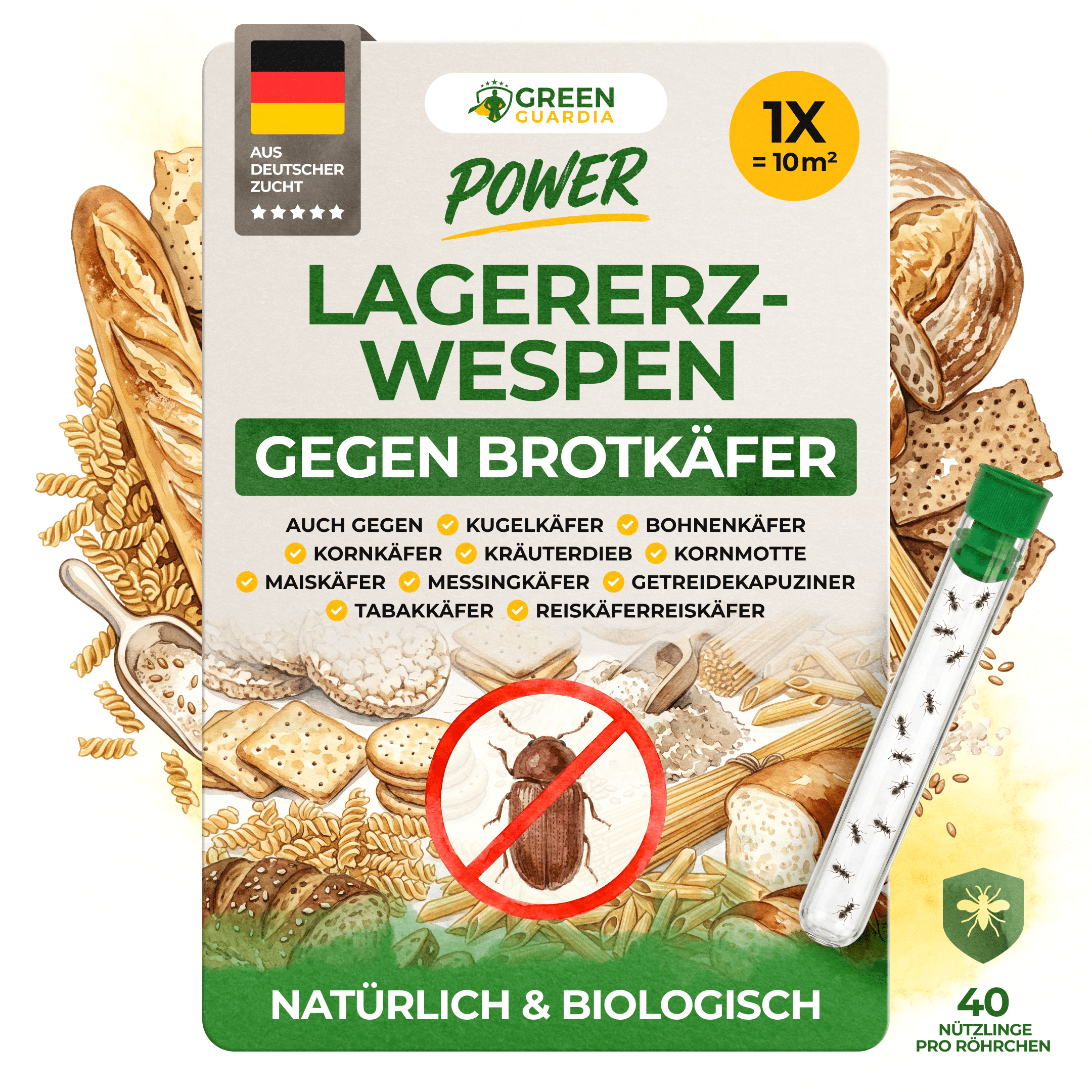
Pteromalid wasps (Lagererzwespen) are a natural support against pantry beetles, as they parasitize beetle eggs, thus preventing the next generation. They are harmless to humans and disappear on their own once no more hosts are present.
FAQ about darkling beetles
Is this dangerous to health?
Darkling beetles do not transmit diseases, but they do contaminate food – therefore, infested goods should be disposed of.
Why do they keep coming back?
Often, eggs remain in cracks or a package was overlooked. Consistent cleaning and checking are crucial.
Are traps enough?
Traps are for monitoring purposes; they do not replace cleaning, airtight storage, or, if necessary, the use of Pteromalid wasps.
What is the best prevention?
Airtight containers, short storage times, and regular pantry checks.