






























































Pest control in mills and bakeries: Natural methods for hygienic operations
Mills and bakeries provide perfect conditions for pests: flour dust, warm zones, constant inventory turnover, and many hard-to-reach corners. This is exactly why stored product pests like pantry moths and grain beetles are among the most common hygiene risks. A smart approach doesn't rely on "quick fixes," but on a stable system of root cause analysis, early detection, and natural measures—tailored for audits, HACCP, and daily operations.
Causes: Why are mills and bakeries particularly susceptible?
Pest pressure usually doesn't appear "out of nowhere," but stems from recurring micro-sources: dust, damaged goods, residue, and warm niches. In mills, pests can hide in conveyors, sifting systems, or sack storage—in bakeries, they are often found in storage areas, cracks, under equipment, or at transitions between production and storage.
- Flour dust & crumbs (constant food source in peripheral zones)
- Residue in silos, sacks, big bags, or bulk material transitions
- Incoming goods (batch changes, pallets, packaging)
- Heat (machine rooms, motors, ceiling areas)
- Hard-to-reach areas (joints, baseboards, behind equipment)
Detection: Typical signs of infestation in your operation
The earlier you detect an infestation, the easier it is to control. In mills and bakeries, you often don't see the insects themselves immediately—you see the signs first. Check quiet zones, peripheral areas, and transitions between storage, production, and packaging especially carefully.
- Webbing or larval skins on sack seams, corners, and shelves
- Moth flight in quiet areas (especially noticeable in the evening/morning)
- Fine bore dust/small dust piles in joints or machine peripheral zones
- Beetle sightings near windows, lamps, or near dry goods
Control: Natural methods for hygienic operations
Effective protection means: reduce hotspots first, then provide targeted and sustainable support. In hygienically sensitive operations, natural methods work particularly well when integrated into a clear concept: cleaning, monitoring, and biological measures. This ensures stability—without causing unnecessary disruption to daily operations.
1) Immediate measures: Mitigate hotspots
- Peripheral cleaning: Consistently clean baseboards, machine edges, corners, and transition points
- Dust management: Systematically remove flour dust accumulations in quiet niches
- Avoid residue: Regularly empty and keep sack storage/bulk material zones clean
- Check incoming goods: Separate damaged sacks/packaging
2) Naturally reducing pantry moths (biological, targeted)
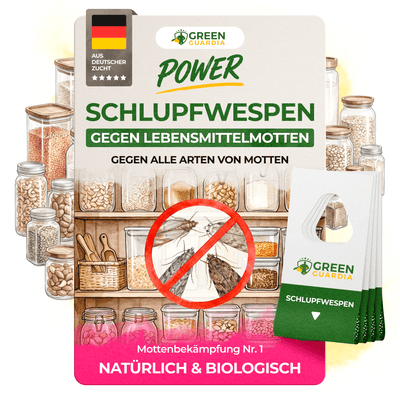
Pantry moths thrive particularly where dry products are stored or where dust and residue accumulate. A proven biological measure is using beneficial insects that parasitize moth eggs, thereby breaking the next generation—ideal as a supplement in storage zones and quiet areas.
For targeted support, Trichogramma wasps against pantry moths are suitable—especially if you notice moth activity in dry storage, flour/grain zones, or near packaging.
3) Lagererzwespen: Biological support for beetle pressure in storage
In addition to moths, various grain beetles can appear in mills and bakeries—often in warm, dusty zones or where residue is present. Biological beneficials can help reduce development stages in hidden areas here—especially when hygiene and monitoring are consistently maintained in parallel.
As a natural supplement, Lagererzwespen (Anisopteromalus calandrae) are useful for storage, sack, and peripheral zones if you want to sustainably lower infestation pressure.
Prevention: Maintaining a hygienic operation long-term
Long-term pest prevention in a food environment is always a combination of technology, routine, and control. By minimizing dust sources, cleanly separating material flows, and regularly checking hotspots, pest pressure is significantly reduced—and audits become easier.
- Hygiene plan: Fixed cleaning routines for peripheral zones, machine environments, and sack storage
- Zone management: Clearly separate incoming goods, storage, production, and waste
- FIFO/FEFO: Reduce storage times, rotate batches cleanly
- Structural integrity: Seal joints, cable passages, and baseboards
- Monitoring: Define control points and document results
Practical tip: Set up 8–12 fixed control points (e.g., incoming goods, sack storage, peripheral zones, packaging, waste area). A weekly quick check with documentation is often more effective than infrequent "major actions."
Frequently asked questions about pests in mills & bakeries
Why are pantry moths so common in bakeries?
Pantry moths thrive on dry goods, warm zones, and dust/residue. In bakeries, these conditions often occur in storage areas, peripheral zones, and quiet corners. A hygiene and monitoring system significantly lowers the risk.
Which measures are most effective during daily operations?
A combination of consistent peripheral cleaning, residue management, clear incoming goods inspection, and regular checks works best. Biological measures can supplement this once hotspots are identified—without disrupting operations.
How quickly will I see improvements?
Often, a clear trend is visible after just a few weeks if cleaning and monitoring are implemented consistently. The key is to prevent successive generations and keep hotspots clean long-term.
How can I document measures to be audit-ready?
Set up fixed control points, log inspection intervals, and document any anomalies as well as corrective actions (e.g., deep cleaning, area checks, routine adjustments). This aligns well with HACCP-oriented procedures.
Conclusion: In mills and bakeries, pest control is primarily about process management: minimizing dust and residue, detecting hotspots early, and maintaining control with natural, integrated measures. This ensures your operations remain hygienic, audit-ready, and secure in the long run.
Take action now: Start with fixed control points and consistent peripheral cleaning. If you detect moth or beetle activity, Trichogramma wasps against pantry moths and Lagererzwespen can be a suitable, natural addition to sustainably lower infestation pressure.