

















































You walk up to your beloved Monstera in the morning, ready to watch it grow, and suddenly notice fine, silvery-white threads on the leaves. A little shock runs through you, as your plant suddenly looks tired and weak. If your plants' leaves are developing yellow speckles, you need to act quickly and recognize the typical signs of spider mites. These tiny arachnids are the nightmare of many plant lovers and spread rapidly under ideal conditions. But don't panic; with the right diagnosis and biological helpers, you can save your greenery safely and sustainably. We will show you how to definitively identify the infestation and get rid of the pests without chemicals.
How can you identify a spider mite infestation?
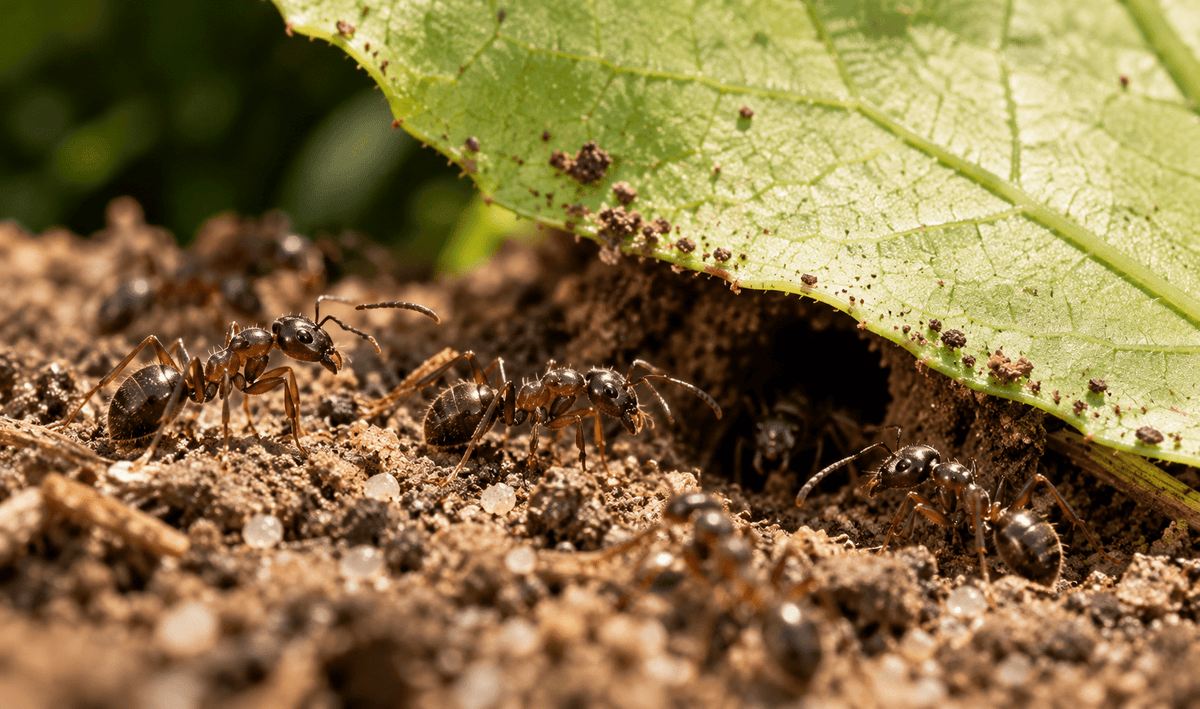
Spider mites are tiny, usually barely half a millimeter in size, and almost invisible to the naked eye. They prefer to sit on the shady undersides of leaves, where they suck nutritious plant sap directly from the plant cells. If you want to identify spider mites, you should first look for the characteristic bright, fine dots on the upper side of the leaf. These occur where the cells have been sucked dry and have died. As the infestation progresses, the leaves turn completely brown, become dry, and eventually fall off. Another unmistakable sign is the fine webbing that appears, especially when you gently mist the affected plant parts with water. Especially in the cold season, when the heating air in living spaces is dry, spider mites multiply on houseplants at a rapid pace. Often, the fine threads are initially mistaken for normal dust or harmless spider webs, but the combination of the webbing and the typical speckled leaf damage leaves no doubt.
What are the risks of confusion with houseplants?
Not every change on a leaf immediately points to these annoying arachnids. Plant owners often mistakenly suspect an infestation of thrips or mealybugs when they notice atypical discoloration on their green darlings. However, confusion can cost valuable time. While mealybugs leave behind very noticeable, cottony, white webs, spider mite webs are extremely fine and delicate, spun around the leaf edges. Additionally, thrips leave behind characteristic silvery spots with tiny, black fecal pellets on the leaves when feeding, which does not occur with spider mite infestations. Anyone who understands the difference precisely can take targeted action and use the right beneficial insects before the plant suffers permanent damage. At Green Guardia, we tailor our biological products extremely precisely to the respective target pests. For you, this means you get exactly the help your specific pest requires, without unnecessary experiments.
How can spider mites be controlled?
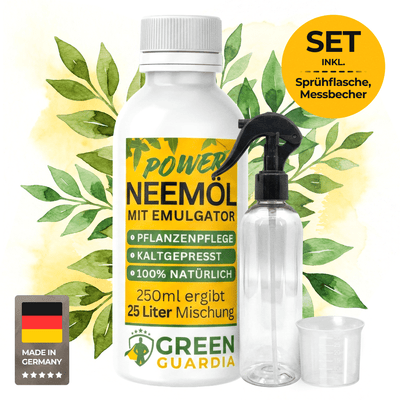
Once the diagnosis is confirmed and you have identified the pest, the question arises as to the right method to save your plants. In their desperation, many plant lovers first turn to well-known home remedies such as thoroughly rinsing the leaves or spraying them with a homemade soap-oil mixture. Such a spider mite home remedy can certainly provide short-term relief in the case of a very mild initial infestation by physically clogging the pests' respiratory tubes. However, this method involves significant risks for the plant itself. If applied too thickly, oil coats the leaves and can weaken sensitive species—especially those with hairy or thin leaves.
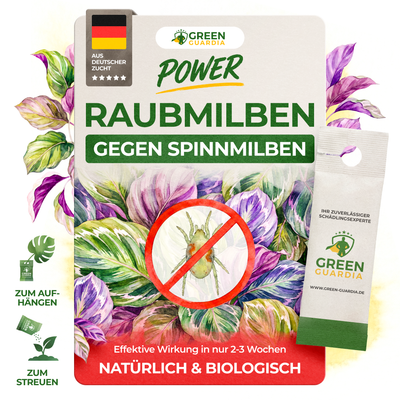
If you want to combat spider mites in the long term, safely, and above all gently, biological beneficial insects like predatory mites offer by far the best solution. These tiny, natural enemies hunt the pests tirelessly into the leaf axils, leaving your plant completely unharmed. To ensure the predatory mites work well, it helps to mist the plants regularly—they prefer it more humid than the spider mites. At Green Guardia, we place great value on clear instructions and simple explanations of use for you. This way, you can successfully use predatory mites on your windowsill effortlessly and without any prior knowledge. The hungry helpers are delivered in small, practical cardboard sachets that you simply hang on the affected plant parts—alternatively, they are available as a loose variant that you sprinkle directly onto the substrate. They get to work immediately and clean your green oasis from the ground up.
Which method suits you best?
To make the right decision for your plants, a direct and honest comparison of common control methods helps.
- Choose a spider mite home remedy if the infestation is only a few days old, you only need to save a single, robust plant, and you want to carry out a quick emergency measure with things from your kitchen immediately.
- Choose biological predatory mites if you want to effectively combat spider mites while prioritizing the health of your plant, if spider mites have infested houseplants throughout the room, or if you are looking for a sustainable solution that reliably reaches the pests' hidden eggs and larvae as well.
Conclusion: With the right eye, an infestation can be identified early and, thanks to the natural support of predatory mites, resolved biologically and completely stress-free. Your plants will soon thank you with fresh, strong leaves.