






























Protecting Against Pea Aphids: Natural and Sustainable Control Methods
Pea aphids can multiply rapidly in spring and summer – especially on peas, beans, and other legumes. The consequences are curled shoots, sticky honeydew, and weakened plants. If you want to control pea aphids, a prompt response is crucial: the sooner you detect the infestation and combine natural measures, the better you will protect the growth, blooms, and harvest.
Causes: Where do pea aphids come from?
Depending on the region, pea aphids either overwinter as eggs or arrive in the spring via winged aphids. Warm, dry weather, dense plant growth, and high nitrogen levels in the soil can encourage an infestation. Young, tender shoot tips are particularly attractive to aphids – they feed on plant sap there and weaken the plant.
What promotes an infestation?
- Warm, dry weather and little rain
- Very dense planting (poor air circulation)
- Heavy nitrogen fertilization (soft, vulnerable shoots)
- Lack of beneficial insects (e.g., ladybugs, lacewings)
Detection: How can you tell if you have pea aphids?
The infestation often begins at the shoot tips and the undersides of leaves. Typical signs include green to greenish aphid colonies, sticky honeydew, and overall stunted growth. In severe infestations, ants often appear, as they feed on the honeydew and "protect" the aphids.
Typical signs
- Many small green aphids on shoot tips and leaf undersides
- Sticky honeydew on leaves and stems
- Curled, deformed, or yellowed leaves
- Weak growth, fewer flowers/pods
- Many ants on the plants
🌿 Tip: Check pea plants at least twice a week from the moment they emerge – especially the shoot tips. Detected early, an aphid infestation is much easier to contain.
Control: Natural measures that really help
For a sustainable aphid strategy, a step-by-step plan pays off: first, reduce them mechanically, then stabilize with beneficial insects, and supplement with plant-based solutions if needed. This way, you can effectively combat pea aphids without disrupting the natural balance in your garden.
1) Immediate aid: Mechanical reduction
- Rinsing: Spray off shoot tips and leaf undersides with a strong jet of water.
- Thinning: Carefully remove heavily infested shoots (do not compost if severely infested).
- Ant management: Disrupt ant trails (ants often encourage the spread of aphids).
2) Introducing beneficial insects: Lacewing larvae as natural helpers
Lacewing larvae are proven beneficial insects for naturally reducing aphids. They actively move across the plant and help decimate aphid colonies – especially if you start early.
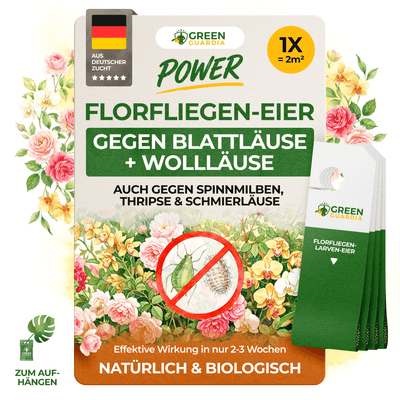
For targeted application, you can use, for example, Lacewing larvae eggs against aphids. If you want to place beneficial insects directly in affected areas (e.g., in raised beds, greenhouses, or on densely growing plants), the hanging variety is also very practical: Hanging lacewing larvae eggs.
3) Supplemental support: Plant-based defense spray
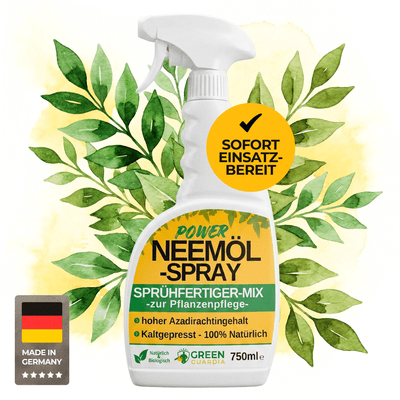
In situations with higher pressure or if you want to additionally protect sensitive shoot tips, a targeted spray can help – ideally as a complement to beneficial insects and good garden hygiene. Always use sprays specifically and ensure you do not hit beneficial insects directly. You can find our matching product here: Aphid defense spray.
🐞 Tip: For consistent results, combine early rinsing with lacewing larvae. Use the aphid defense spray spot-on, not across the whole area and not directly onto the beneficial insects.
Prevention: How to protect peas long-term
Prevention is a game-changer when it comes to pea aphids: when plants grow vigorously, have good air circulation, and beneficial insects consistently find a habitat in your garden, the pressure from infestations is lower.
Prevention Checklist
- Location & Spacing: Do not sow peas too densely – air circulation reduces infestation.
- Balanced fertilization: Do not over-fertilize with nitrogen.
- Gardening for beneficials: Encourage flowering plants and retreats for beneficial insects.
- Regular monitoring: Check shoot tips before colonies become large.
- Early introduction of beneficials: For recurring problems, hanging lacewing larvae eggs are a practical way to support vulnerable areas.
Frequently Asked Questions about Pea Aphids
How fast do pea aphids reproduce?
In warm weather, a population can build up very quickly because aphids often reproduce without mating during the season. This is why early detection (monitoring shoot tips) is so important.
Which measure works best when the infestation is just starting?
A strong jet of water often significantly reduces the initial colonies. Following this, using lacewing larvae will stabilize the balance before the aphids can spread massively again.
Can I combine beneficial insects and spray?
Yes – if you do it specifically. Do not spray broadly and avoid treating areas where beneficial insects are active directly. The aphid defense spray is suitable as a supplement if individual plants are particularly affected.
What are the benefits of the “hanging” lacewing larvae variety?
The hanging version is practical if you want to place beneficial insects directly in infested zones – e.g., on climbing supports, in greenhouses, or in dense crops. You can find the appropriate version here: Hanging lacewing larvae eggs.
Take action now:
Start with a quick check of the shoot tips: if you see the first colonies, rinse the plants and then support them with beneficial insects. For targeted, natural help, we recommend lacewing larvae eggs against aphids – or the practical hanging version. If individual plants are under particular pressure, the aphid defense spray can be used as a spot-on supplement – for healthy peas and a stable harvest.


