























































Effective protection against maize weevils: Environmentally friendly methods for control
Maize weevils are common pantry pests that can sneak into your kitchen, pantry, or storage room unnoticed. They are often only discovered when small beetles, larvae, or fine traces of crumbs appear in dry foods such as grain products, corn, flour, muesli, or pet food. To prevent the infestation from spreading, it is worth following a quick, structured plan covering causes, identification, natural control, and prevention.
The good news: With consistent hygiene, smart monitoring, and biological support, a maize weevil infestation can usually be well contained – without using unnecessary chemicals near your supplies.
Causes: Where do maize weevils in the house and pantry come from?
In most cases, maize weevils (or similar pantry beetles) are introduced via already infested products. This could be a freshly purchased package of flour, a bag of pet food, or loose goods that were left open for too long. Warm, dry storage conditions also favor their development.
- Introduction via infested food packaging or bulk containers
- Open storage of flour, grain, corn products, or dry food
- Heat (e.g., pantry cupboard next to a stove/heater) accelerates development
- Crumbs, dust & cracks as hiding places for larvae and pupae
Tip: If you keep finding beetles, the source is often not "on the shelf," but in cracks, crevices, screw holes, or behind baseboards. That is exactly where larvae and pupae prefer to hide.
Identification: How can you recognize a maize weevil infestation?
An infestation often appears first in a single product – but can quickly spread to other supplies. Watch for these signs:
- Small beetles in cupboards, drawers, or near food containers
- Larvae or fine traces of crumbs/dust in packaging
- Unusual "movement" in flour or grain products
- Multiple discoveries in a short period – especially in warm, dry areas
Control: Environmentally friendly measures that really work
If you want to get rid of maize weevils, the key is to find the source, clean thoroughly, and sustainably reduce the infestation pressure. Here is a practical approach:
1) Sort out infested supplies immediately
- Check all suspicious packages (flour, muesli, corn products, grain, dry food).
- Always critically check openly stored food.
- Dispose of affected products in airtight bags (do not leave them open in the trash can).
2) Thorough cleaning: Cracks, screw holes, hinges
- Empty cupboards completely and vacuum intensively (including corners, cracks, and screw holes).
- Wipe down with a damp cloth afterward to remove fine dust and any remaining residue.
- Empty or dispose of the vacuum cleaner bag/container directly (outside the home).
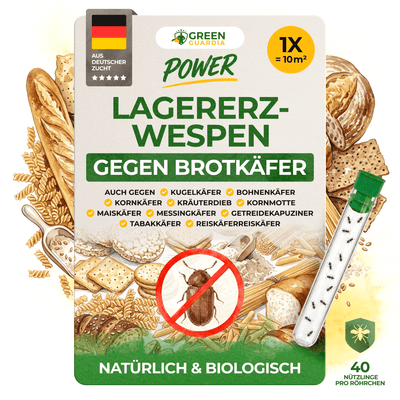
3) Biological support: Targeted use of Habrobracon hebetor wasps
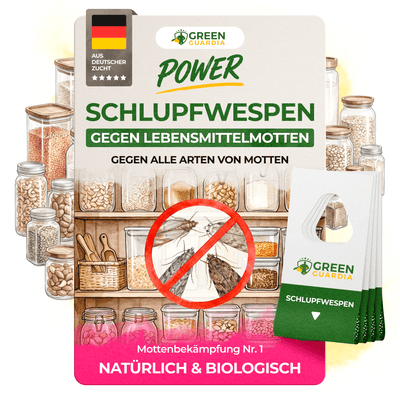
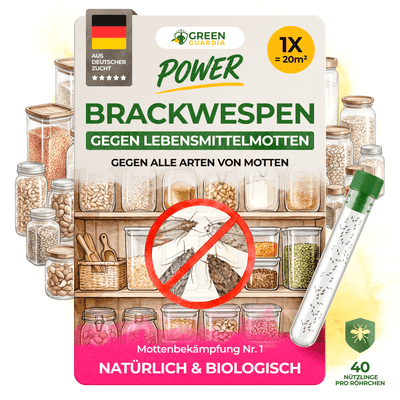
For natural, pantry-friendly support, many households rely on Habrobracon hebetor wasps. These beneficial insects are specialized in working in typical pantry areas and help to reduce the infestation pressure in an environmentally friendly way – without aggressive chemicals near your food.
Especially in cases of recurring discoveries or if you are not sure whether all developmental stages have been removed, the use of Habrobracon hebetor wasps can be a sensible addition to cleaning. This gives you a sustainable strategy rather than just a short-term "quick fix."
Prevention: How to protect supplies from maize weevils long-term
The best prevention is a combination of proper storage and regular checks. This significantly reduces the risk – even if a product was accidentally brought home unnoticed.
- Store supplies in airtight containers (glass/PP containers with seals)
- Check new products quickly and avoid long-term storage in paper packaging
- Clean cupboards regularly – especially corners, edges, screw holes, and baseboards
- Avoid warm storage areas (e.g., next to a stove/heater)
- If there is a recurring risk, use Habrobracon hebetor wasps preventively
Frequently asked questions about maize weevils
How do maize weevils get into my kitchen in the first place?
They are usually brought in via already infested products – for example, flour, grain products, or pet food. Since eggs and larvae are often invisible inside the product, the infestation is frequently noticed only later.
What is the most important step to get rid of maize weevils?
The decisive factor is the combination of sorting out (removing the source) and deep cleaning (cracks/crevices). If you would also like sustainable, biological support, Habrobracon hebetor wasps are a sensible addition.
Are Habrobracon hebetor wasps suitable for households?
Yes, they are typically used in pantry and storage areas to reduce infestation pressure in a natural way. It is important to follow the application instructions and ensure that supplies are kept clean and tightly sealed.
How do I prevent the infestation from returning?
Consistently store food in airtight containers, clean cupboards regularly, and check new products. In high-risk areas, preventive support with Habrobracon hebetor wasps can help prevent relapses.
Take action now:
Once you have found the first maize weevil, it is worth acting immediately: check your supplies, remove infested products, and clean the cupboards thoroughly. For sustainable, environmentally friendly support in pantry areas, you can additionally use Habrobracon hebetor wasps – especially if you want to avoid recurring discoveries.


