
















































































Effective protection against tobacco beetles – natural control methods
The tobacco beetle (Lasioderma serricorne) is a common pantry pest. It attacks not only tobacco but also many dry food products such as spices, tea, herbs, dried fruit, or pet food. The problem: you often don't notice an infestation until several packages are already affected. However, with the right combination of root cause analysis, consistent hygiene, and natural measures, you can effectively get tobacco beetles under control – and prevent them long-term.
Causes: Where do tobacco beetles come from?
In most cases, tobacco beetles are introduced – for example, via already infested goods or damaged packaging. The larvae develop unnoticed within the product and can then spread throughout your pantry or storage area.
- Introduction via dry supplies (e.g., tea, herbs, spices, dried fruit)
- Pet food or bird feed as an underestimated source of infestation
- Warm storage areas (near heaters, upper kitchen cabinets, shelf storage)
- Leaky packaging or long storage times without inspection
- Crumbs & product dust in crevices, cabinet joints, and shelf supports
Tip: First, check products with strong odors (spices, tea, herbs) as well as pet food. That is exactly where larvae are particularly likely to hide – often without you seeing any beetles immediately.
Detection: How do you recognize a tobacco beetle infestation?
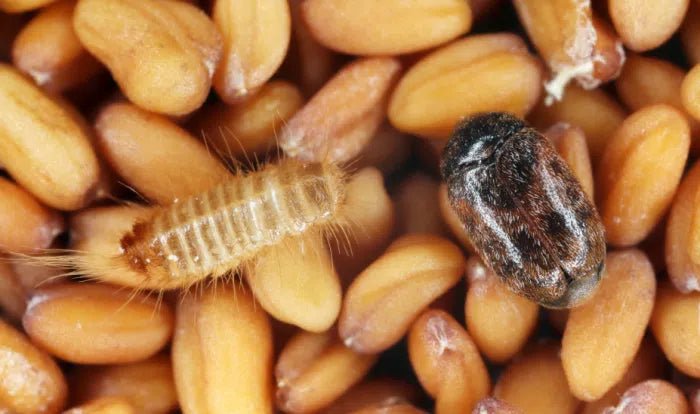
Tobacco beetles are small, brownish, and are often only noticed when they appear on windowpanes or near lamps. Clearer signs are usually found in their environment within the cabinet:
- Small, brown beetles in the kitchen, pantry, or on the window
- Fine dust, crumbs, or "product flour" in packages and cabinet joints
- Larvae (small, light-colored) or cast-off larval skins in corners and crevices that seem clean
- Suspicious packages with clumping or altered contents
Control: Effective, natural methods
If you want to get rid of tobacco beetles, a clear process is most helpful. It is important to not just do a "superficial cleaning" but to consistently remove the source of the infestation and address the hiding spots in the surrounding area as well.
1) Find the infestation source and sort out supplies
- Empty all supplies out completely and inspect them package by package.
- Dispose of infested products immediately (seal airtight and take outside directly).
- It is better to replace suspicious products rather than trying to "use them up."
2) Deep cleaning: Crevices, joints & shelf supports
- Thoroughly vacuum cabinet joints, drill holes, shelf supports, and baseboards.
- Afterward, wipe down with a damp cloth – including hard-to-reach areas.
- Empty the vacuum cleaner bag/container immediately afterward (outside the home).
3) Natural help from beneficial insects: Trichogramma wasps
For targeted control in the household, many people rely on Trichogramma wasps, which are known as natural opponents of moths and can be used to support efforts in storage areas. If you are looking for a gentle solution, Trichogramma wasps against pantry moths are a suitable option – especially if you also want to keep an eye on typical moth sources in dry goods at the same time.
Especially in pantries or storage cabinets, the additional use of Trichogramma wasps against pantry moths can make sense to reduce infestation pressure in typical hiding spots – as a supplement to hygiene, inspection, and airtight storage.
Prevention: How to protect your supplies long-term
The best prevention against tobacco beetles is supply management that detects introductions early and prevents spreading:
- Store supplies in airtight containers (glass, metal, or sturdy canisters)
- Briefly check new goods: packaging, smell, crumbs/dust
- Regularly clean crevices & shelf supports (not just the visible surfaces)
- "First in – first out": use older products first
- For recurring risks, plan for natural support, e.g., Trichogramma wasps against pantry moths
Frequently asked questions about tobacco beetles
Which food products are most frequently affected?
Tobacco beetles love dry products. Frequently affected items are spices, tea, herbs, dried fruit, nuts, as well as pet or bird food. Check older packages and opened items in particular.
How long does it take to get rid of tobacco beetles?
That depends on how early you discover the infestation and how consistently you act. If you remove the source of the infestation, clean thoroughly, and store supplies in airtight containers, the problem can usually be reduced significantly. It is important to keep checking for several weeks.
What helps naturally – without aggressive chemicals?
The foundation is always: sort out, clean, store airtight. Additionally, many households rely on natural support from beneficial insects. For this purpose, for example, Trichogramma wasps against pantry moths are suitable as a gentle supplement in the storage area.
How do I prevent a new infestation?
Consistently store supplies in airtight containers, clean cabinet joints regularly, and briefly check new goods when putting them away. If there is a recurring risk, natural guidance with Trichogramma wasps against pantry moths can provide additional support.
Take action now:
If you have discovered tobacco beetles, start immediately: check supplies, dispose of infested products, clean cabinet joints thoroughly, and switch to airtight storage for the future. For natural support in the storage area, you can additionally plan for Trichogramma wasps against pantry moths – especially if you want to take preventative measures long-term.