

































Ponytail Palm – Care, Location & Tips for the Beaucarnea Recurvata
Are you looking for a plant that grows almost by itself and can survive a week of vacation without watering? Then the Ponytail Palm, botanically Beaucarnea Recurvata, is perfect for you. With its striking, water-storing trunk and wild mop of narrow leaves, it is not only a visual highlight but also a true survivalist among houseplants.
Origin & Characteristics
The Beaucarnea Recurvata is native to the dry regions of Mexico. It grows there under sometimes extreme conditions. Its most important feature is the thickened base of the trunk (caudex), which serves as a water reservoir and gives the plant its name. A healthy Beaucarnea Recurvata can easily survive long dry spells thanks to this reservoir, making it one of the easiest-to-care-for roommates you could have.
Appearance & Growth
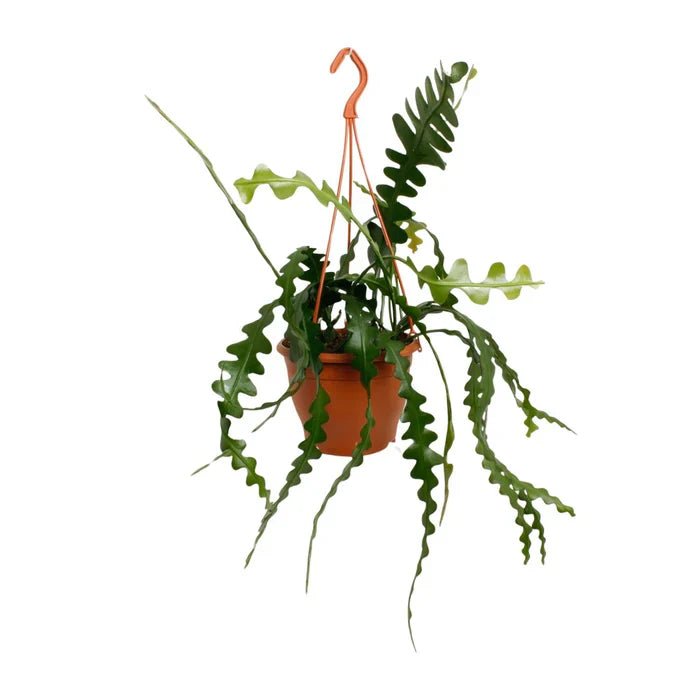
The contrast between the rough, corky trunk and the fine, elegantly drooping leaves is typical of the Ponytail Palm. It grows very slowly, making it perfect for locations where you don't want it to immediately outgrow its space. Delivered in a 12 cm pot with a height of approx. 45 cm, the Beaucarnea Recurvata is already well-established and ready to decorate your windowsill.
The Ideal Ponytail Palm Location
Where does the Beaucarnea feel most at home?
As a child of the sun, the Beaucarnea Recurvata loves light. A location with plenty of brightness is the most important requirement for healthy growth.
- Light: Very bright; direct sun is well-tolerated after an acclimatization period.
- Temperature: Warm all year round (18-25 °C). In winter, it can be slightly cooler (approx. 10-15 °C) to allow for a resting phase.
- Air: It tolerates dry heating air significantly better than many other tropical plants.
Care & Watering: Caring for your Ponytail Palm
Less is more – Watering correctly
When caring for your Ponytail Palm, restraint is the key to success. Since the plant stores water in its trunk, it is sensitive to overwatering. Water only when the substrate has dried out halfway or even almost completely. Waterlogging is the greatest enemy of the Beaucarnea Recurvata and can lead to trunk rot.
Typical Problems & Solutions
Why does the Ponytail Palm get brown leaf tips?
Brown tips at the ends of the leaves are often mechanical in nature (if you brush against the leaves while passing by) or a sign of air that is too dry. Another reason can be too much water—if parts of the trunk feel soft, check the roots immediately. If the plant looks pale overall, it usually lacks light.
🌵 Expert tip: If the Ponytail Palm is in a cooler spot, almost do not water at all during winter. The plant switches to energy-saving mode and needs hardly any moisture from the soil.
Prevention & Long-term Health
Use a permeable substrate (e.g., cactus soil) so that excess water can drain away immediately. You should only fertilize sparingly during the growing season from April to September. Regular checks for pests like spider mites or scale insects will help keep the plant vital in the long term.
Frequently Asked Questions about the Ponytail Palm
Can I cut off the brown tips?
Yes, you can remove them with sharp scissors. However, do not cut into the healthy green tissue; leave a minimal brown margin to avoid disturbing the healing process.
Is the Ponytail Palm toxic to pets?
The Beaucarnea is considered non-toxic. However, the leaves are very sharp-edged and can cause cuts in the mouth or digestive tract if nibbled on (especially by cats).
When should I repot the Ponytail Palm?
As it grows slowly, repotting every 3–5 years is sufficient. The new pot should only be slightly larger than the old one, as it prefers limited root space.
Take action now:
The Ponytail Palm is the perfect green partner for a stress-free home. With its architectural growth and modest nature, it forgives almost any beginner's mistake. Above all, ensure a bright location and avoid being overzealous with watering. This way, your "bottle tree" will accompany you for many decades to come.
Bring consistency to your plant collection! Order your robust Ponytail Palm Beaucarnea Recurvata from us now and look forward to an extraordinary plant with character!