














































Creeping Thyme (Thymus serpyllum) – Care, Location & Hardy Ground Cover
A carpet of delicate flowers and a spicy aroma that rises with every touch: Creeping Thyme (botanically Thymus serpyllum) is a true survivalist. Whether in a rock garden, as a fragrant filler for paving joints, or as a robust bee pasture, this low-growing thyme is the perfect choice for sun-drenched spots. In this guide, you will learn how to successfully care for your Creeping Thyme.
Origin & Characteristics
Thymus serpyllum is native to large parts of Europe and Northern Asia. It loves sandy, barren soils and copes excellently with extreme drought. When you buy Creeping Thyme (Thymus serpyllum), you are choosing a hardy, evergreen ground cover. It is known for its essential oils and serves as a valuable food source for butterflies and wild bees in the summer.
Appearance & Growth
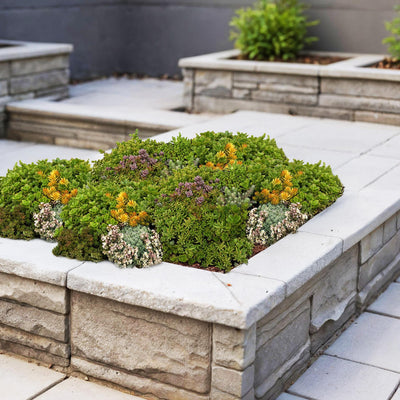
The plant forms dense, low mats that reach only about 10–25 cm in height. With a delivery size of 10–25 cm in a 9 cm pot, the Creeping Thyme is already well-established. The tiny, dark green leaves are covered in countless purple-pink flowers in the summer. It has a creeping growth habit and is even moderately foot-traffic tolerant, making it ideal for garden paths.
The Ideal Location for Creeping Thyme
Where does Thymus serpyllum thrive best?
Sun is the most important ingredient when caring for Creeping Thyme. Without direct light, it loses its compact shape and its willingness to bloom decreases.
- Light: Full sun. A spot in a rock garden or on stone wall tops is ideal.
- Soil: Dry, sandy, well-draining, and rather nutrient-poor.
- Avoiding Waterlogging: The soil must never be permanently wet, otherwise the roots will rot.
Care & Watering: Caring for Creeping Thyme
Keep water requirements moderate
When caring for Creeping Thyme, the motto is: less is more. Once established, Thymus serpyllum hardly needs any additional water. You should only water sparingly during long periods of heat or when grown in a pot. Water directly at the base and avoid wetting the leaves in the blazing sun.
Typical Problems & Solutions
Why does my thyme have brown or bare patches?
Bare patches in the middle of your thyme carpet often indicate aging or too much moisture. Regular pruning prevents the plant from becoming woody at the base. To promote vitality and support plant health, you can use natural aids to support care, which strengthen the plant's immune system.
✂️ Care tip: Trim back the Creeping Thyme slightly after flowering in late summer. This promotes dense, compact growth and prepares the plant optimally for winter.
Prevention & Long-term Care
Fertilization is almost never necessary for Creeping Thyme; too many nutrients make the tissue soft and diminish the aroma. Adding a little lime or sand during planting provides long-term growth support. To promote leaf vitality and support plant defense, biological, nature-based products can be used.
FAQ about Creeping Thyme
Is Creeping Thyme hardy?
Yes, Thymus serpyllum is absolutely hardy and survives even heavy frosts without problems, as long as the soil is not too wet.
Can you eat Creeping Thyme?
Yes, it is edible and has a fine aroma, though it is less intense than classic garden thyme (Thymus vulgaris). It is excellent for teas or herb butter.
How fast does the ground cover spread?
It grows at a moderate speed. Given good location conditions, it forms dense, closed mats within two years.
Take action now:
Creeping Thyme is the ideal choice for anyone looking for a low-maintenance yet ecologically valuable plant. With its dense growth and spicy fragrance, it transforms barren corners into blooming landscapes. Give it a sunny spot and enjoy the uncomplicated vitality of this little powerhouse.
Get the fragrant ground cover! Order your healthy Creeping Thyme (Thymus serpyllum) from us now and enrich your garden with a valuable bee pasture!


