










































Sansevieria Zeylanica – Care, Location & Tips for the Snake Plant
Looking for a roommate that forgives almost anything? The Sansevieria Zeylanica, also known as the Snake Plant Zeylanica, is the epitome of a robust houseplant. With its sword-shaped, dark green marbled leaves, it not only looks modern but also actively improves indoor air quality. In this guide, you will learn everything you need to know about this fascinating plant.
Origin & Characteristics
The Sansevieria Zeylanica originally comes from the dry regions of Sri Lanka. As a succulent, it has learned to store water in its thick leaves, making it extremely resistant to drought. It is one of the air-purifying plants that can release oxygen at night and filter pollutants from the air.
Appearance & Growth
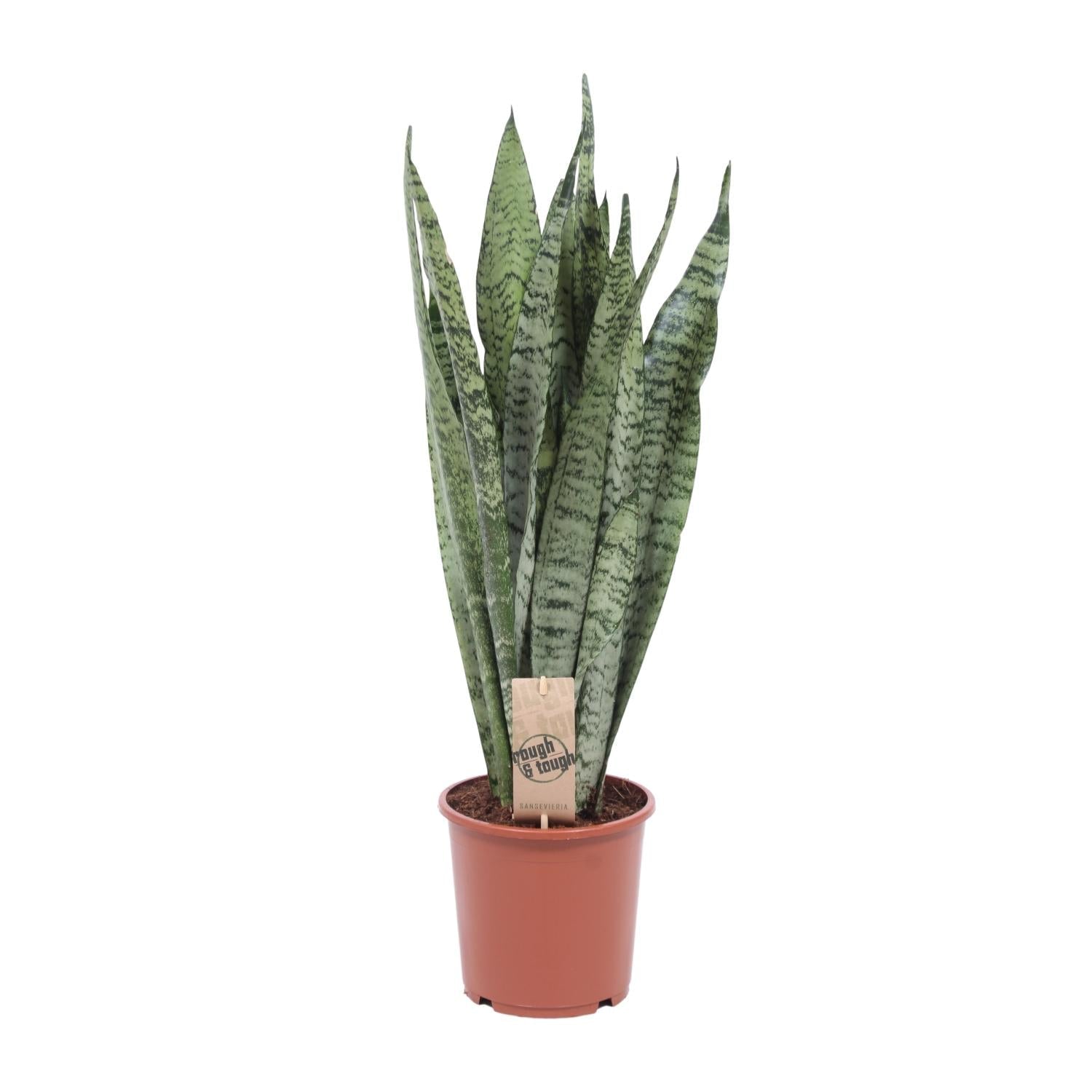
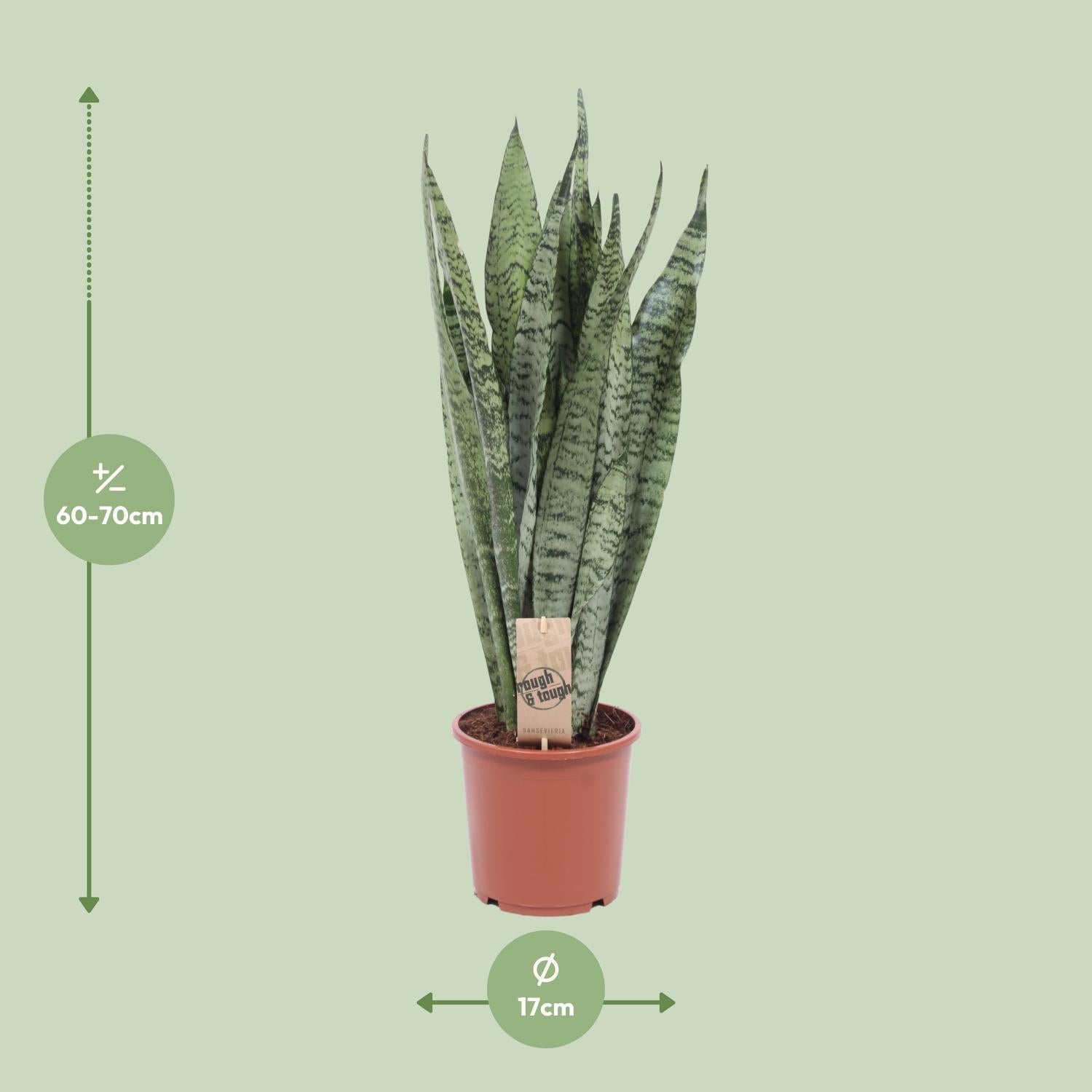
The leaves of the Sansevieria Zeylanica grow straight and upright, reaching an impressive height of 70 to 120 cm. Their surface is marked by an elegant, wavy pattern in various shades of green. It grows rather slowly, but retains its striking shape for years.
The Ideal Location for the Snake Plant
Where does the Sansevieria Zeylanica feel most at home?
One of the biggest advantages of the Sansevieria is its tolerance to different locations. It can handle almost any lighting condition. A bright spot encourages the pattern of the leaves, but shadier corners are also no problem.
- Light: Bright to semi-shaded; it even tolerates direct sun or shade.
- Temperature: Ideally between 15 °C and 28 °C; it does not like cold below 12 °C.
- Air: Dry heating air is no challenge for it.
Care & Watering: Caring for Sansevieria Zeylanica
How much water does the snake plant need?
When caring for the Sansevieria Zeylanica, the motto is: less is more! Since it stores water, it should only be watered when the substrate has almost completely dried out. In winter, watering every 4–6 weeks is often sufficient.
Typical Problems & Solutions
Why does the snake plant get soft leaves?
If the leaves of the Sansevieria Zeylanica become soft at the base or bend over, it is almost always a sign of too much water (waterlogging). In this case, you should stop watering immediately and, if necessary, repot the plant in dry substrate. Brown, dry spots, on the other hand, can be a sign of sunburn caused by sudden direct sunlight.
🌱 Care Tip: Wipe the leaves occasionally with a damp cloth. Dust clogs the pores of the leaves and limits the air-purifying function of the Sansevieria.
Prevention & Long-term Health
To keep your plant vital in the long term, use a well-draining succulent substrate. Fertilizing in spring and summer with cactus fertilizer is completely sufficient. Since it grows slowly, it only needs to be repotted every few years – usually only when the roots are visibly crowding the pot.
Frequently Asked Questions about Sansevieria Zeylanica
Is the Snake Plant Zeylanica toxic?
Yes, the snake plant contains saponins and is considered mildly toxic to pets (dogs/cats). Make sure that the leaves are not chewed on.
How fast does a Sansevieria grow?
It is one of the slower-growing plants. This makes it ideal for locations where it should not become too large after a short time.
Can a snake plant bloom?
It is rare, but possible! Under optimal conditions, older plants develop small, greenish-white flower spikes that emit a very sweet fragrance.
Take Action Now:
The Sansevieria Zeylanica is the perfect choice for anyone who has little time for plant care but does not want to go without natural greenery. Whether as an elegant eye-catcher in the office or as a low-maintenance plant in the bedroom – it will not disappoint you. If you want to improve your indoor air quality and at the same time integrate a stylish design element, the Snake Plant Zeylanica is your ideal partner.
Are you ready for more green? Order your Sansevieria Zeylanica from us now and look forward to a plant that can stay with you for decades!