




















































Pantry moths: Identifying and permanently stopping an infestation
Pantry moths are among the most common stored-product pests in kitchens and homes. Adult moths are harmless – the actual damage is caused by the larvae, which contaminate food with webs and feeding. Here you will learn how to reliably identify pantry moths and get them under control long-term.
What are pantry moths?
The term "pantry moth" refers to several species of moths that infest dry stored goods. These include the Indian meal moth, Mediterranean flour moth, and warehouse moth. The adults lay eggs in or near food – from which larvae hatch and feed on the supplies.
How to recognize an infestation
- Small moths flying in the kitchen in the evening or at night
- Fine webs or threads in food
- Clumped or "spiderweb-like" supplies
- Larvae or pupae on packaging, in corners, and under lids
Which foods are affected?
- Flour, semolina, rice, pasta
- Nuts, almonds, seeds
- Dried fruit, muesli
- Pet food and birdseed
Why do infestations occur?
- Introduced via already infested goods
- Long storage times
- Warm temperatures in the kitchen or pantry
- Open or non-airtight packaging
What to do in case of infestation? (natural & sensible)
1. Remove infested food
- Consistently dispose of all infested products
- Thoroughly check adjacent packages as well
2. Clean cupboards thoroughly
- Empty pantry cupboards completely
- Vacuum joints, corners, and drill holes
- Wipe with a damp cloth and allow to dry completely
3. Secure supplies
- Only use airtight containers (glass or metal)
- Check new goods before putting them away
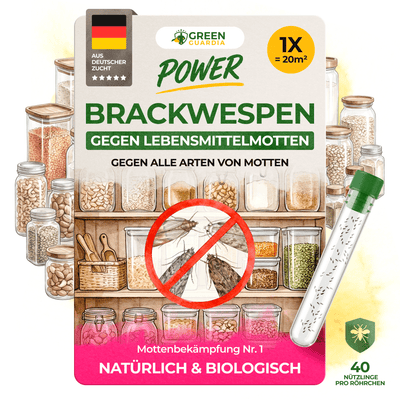
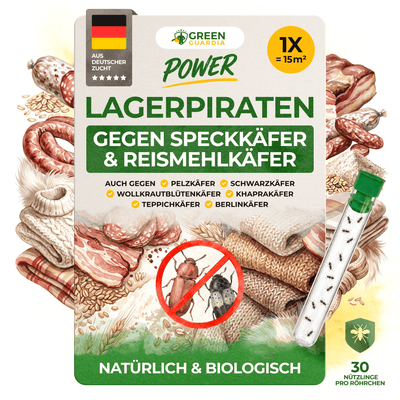
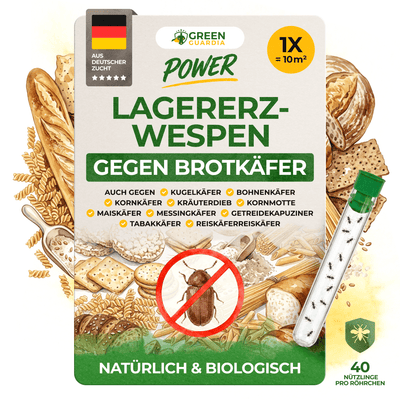
Beneficial insects against pantry moths: Trichogramma wasps
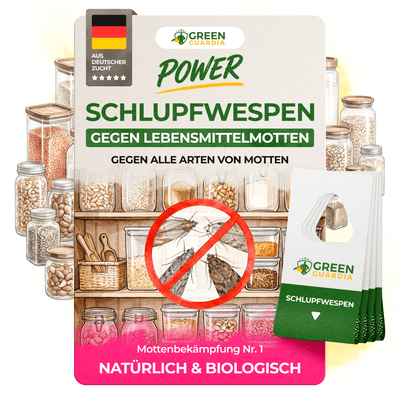
Trichogramma wasps are a proven, natural method against pantry moths. They parasitize the moth eggs, preventing new larvae from hatching. These tiny beneficial insects are harmless to humans, invisible in everyday life, and disappear on their own as soon as no more moth eggs are present.
FAQ about pantry moths
Where do pantry moths come from?
In most cases, they are introduced via infested food and have nothing to do with a lack of cleanliness.
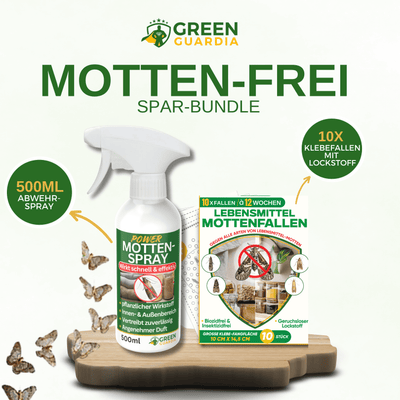
Are pheromone traps enough?
Traps help with monitoring, but do not solve the problem on their own. Cleaning, proper storage, and, if necessary, Trichogramma wasps are key.
Are pantry moths harmful to health?
They are not considered dangerous, but infested food should be discarded.
What is the best prevention?
Short storage times, airtight containers, and regular checks of your supplies.